







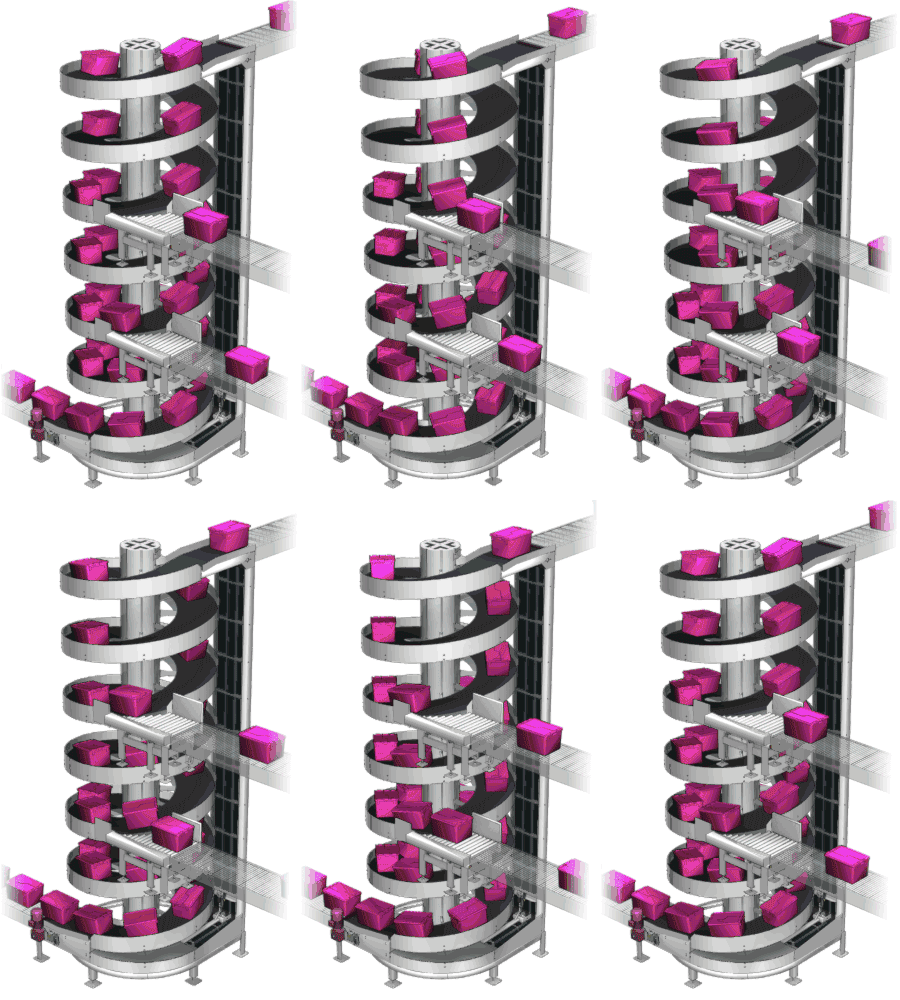
They are ideal for multi-tier pick modules, ecommerce fulfillment, distribution centers, packaging lines, and manufacturing operations where one compact spiral can replace multiple elevating conveyors or long incline runs. Available with 16, 24, 30, and 36 inch slat widths and total in-system weight capacity up to 3,600 lbs, these spirals are engineered for controlled product flow, reliable transfers, and space-saving vertical conveyance.
Key specs at a glance
- Commonly used in: Food & Beverage, Warehousing & Logistics, Consumer Packaged Goods, Industrial & Manufacturing.
- Slat widths: 16 in, 24 in, 30 in, and 36 in.
- Total weight capacity at any one time: up to 3,600 lbs.
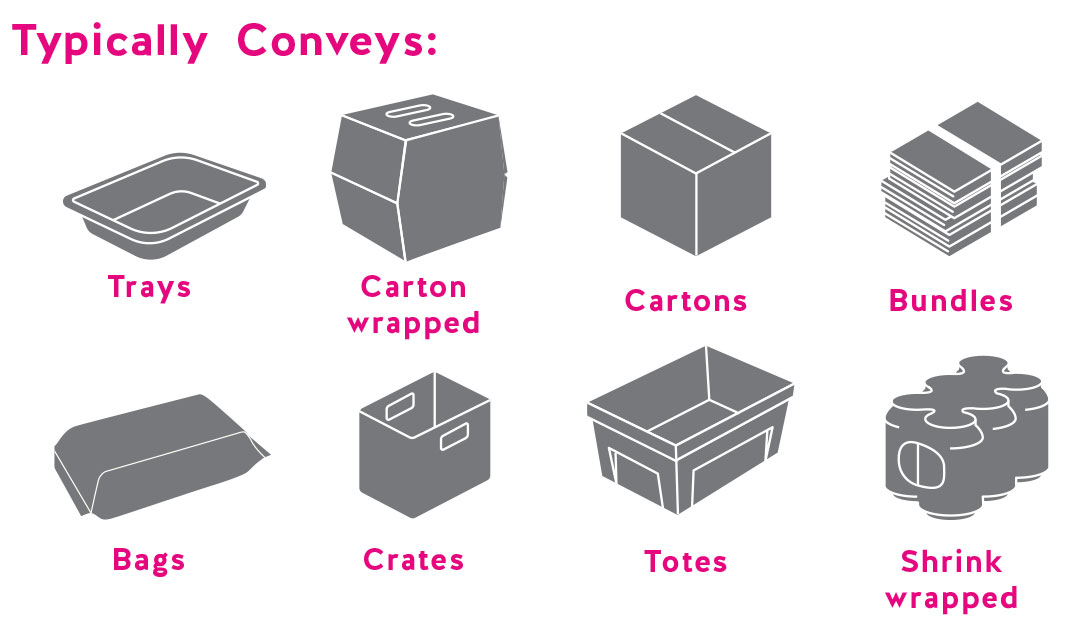
- Best fit: stable unit loads such as cartons, cases, boxes, trays, totes, and packaged goods.
- Controls note: integrated traffic controls are required for multiple entry and exit spiral configurations.
What is a multiple infeed spiral conveyor?
A multiple infeed spiral conveyor is a vertical conveyor that allows products to enter or exit a spiral conveyor at several intermediate elevations. Instead of using separate lifts, inclines, or elevating conveyors for each level, one compact spiral can support controlled product movement across a multi-level operation.
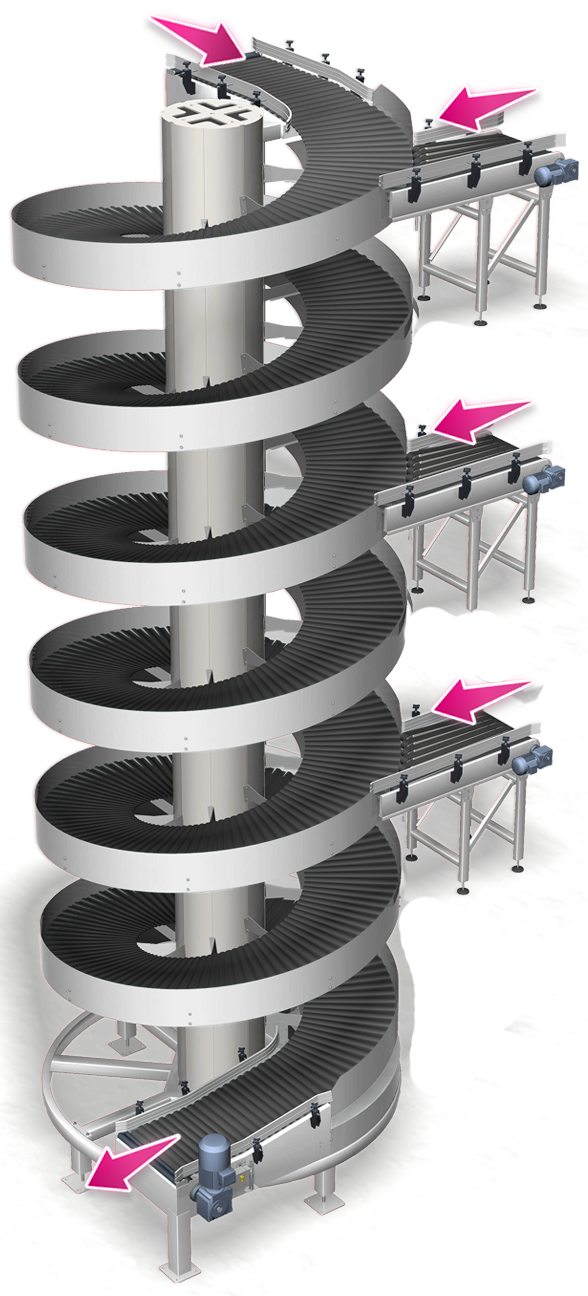
Ryson High Capacity and Wide Trak Spirals can be configured with ancillary induction and divert conveyors to support loads entering or exiting at different heights. This makes the configuration especially valuable for multi-tier warehousing, ecommerce order picking, packaging lines, and production environments where product needs to move through several levels without sacrificing floor space.
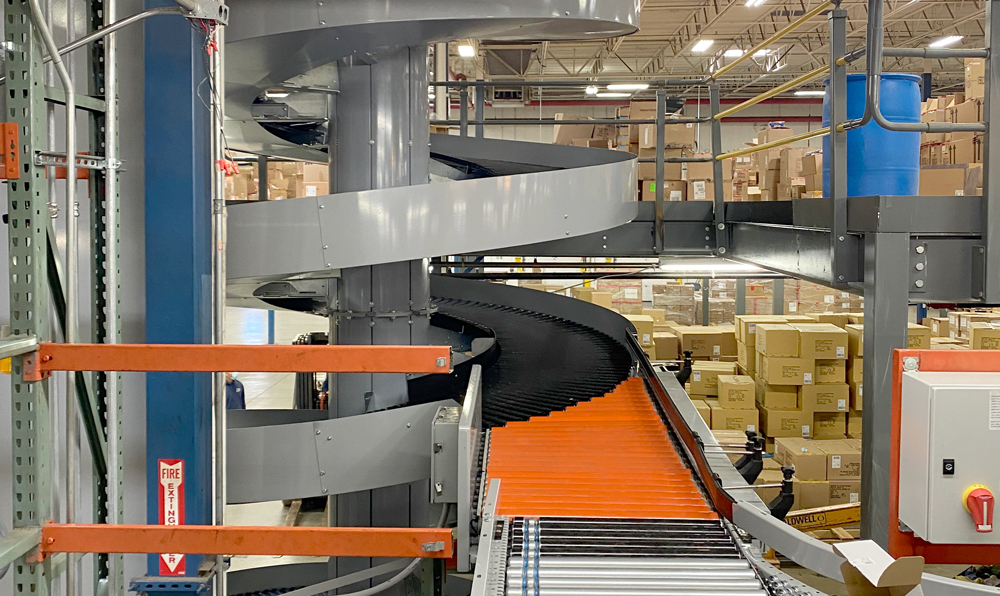
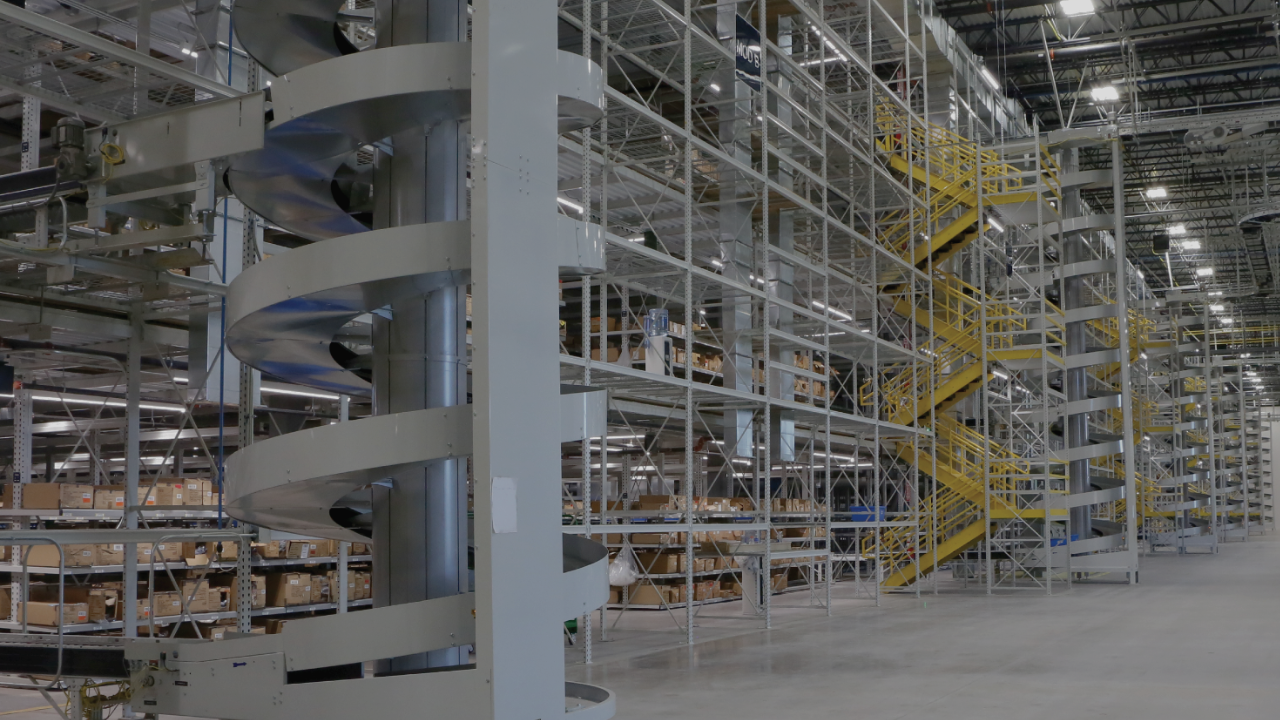
Ancillary induction and divert conveyors can be utilized to allow loads to enter or exit the spiral at intermediate elevations. An ideal spacesaving solution for multi-tiered product flow – like pick modules.
This is a perfect application for multi-level warehousing, e-commerce and other order picking operations. Loads can enter or exit the spirals at multiple elevations, reducing floorspace and the number of elevating conveyors. This concept is also commonly used in applications where a single spiral is utilized for multiple production or packaging lines.
How does a multiple entry and exit spiral conveyor work?
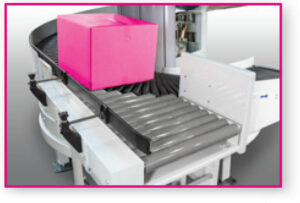 Products enter the spiral through a controlled induction conveyor, travel vertically on the spiral conveyor, and can be discharged at selected elevations through divert or outfeed conveyors. Traffic controls coordinate the timing and spacing of loads so products from different levels do not interfere with one another.
- Controlled induction: Ryson proprietary induction conveyors use powered rollers designed around the spiral radius and adjustable to match the spiral pitch for reliable product transfer.
- Reliable vertical movement: The spiral conveyor moves loads up or down in a continuous flow, helping support high-throughput conveying in a compact footprint.
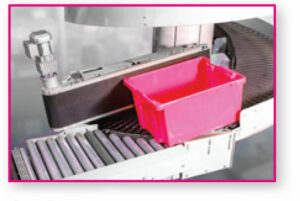
- Controlled diverting: Ryson Divert Out Conveyors use a pivoting arm with a powered face belt to help maintain product orientation and gentle handling during discharge.
- Product stability: Special rounded friction inserts provide enough friction to help prevent back-sliding while still allowing smooth side movement during induction or diverting.
- Traffic control: Integrated controls are required to manage multiple entry and exit points and protect product flow.
 These conveyors are manufactured by Ryson and have the high quality and long life that our customers have come to expect from us.
All Ryson Spirals are thoroughly shop tested prior to shipment, but they do depend on proper integration with the overall conveyor system for optimum performance and long life.
Ryson Spiral Conveyors are designed as vertical conveying solutions that reduce floor space, simplify product flow, and lower long-term ownership cost. For multiple infeed applications, the strongest advantages are layout flexibility, controlled product transfer, high-capacity movement, and reliable integration with surrounding conveyor systems.
Design Flexibility: Our unique design offers flexibility of configuration. It also adds the ability to field modify to accommodate changing future needs at a fraction of the cost of a new conveyor.
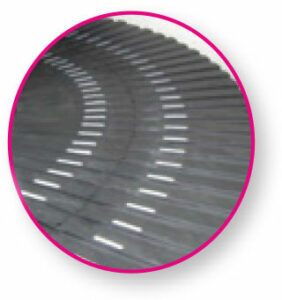 Overlapping slats provide a smooth and efficient conveying surface, ensuring gentle product handling and suitable for all types of conveyable items. Our efficient rolling friction chain-slat design only needs a single drive, resulting in substantial savings in energy, controls and systems integration.
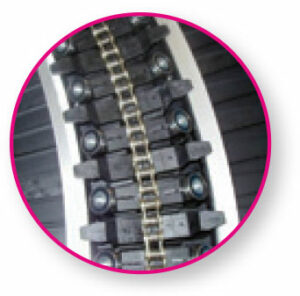 Our innovative chain-slat design enables a low friction operation without any sliding movements or wear-strips. This allows the Spiral to stop and start fully loaded.
Our efficient rolling friction chain-slat design only needs a single drive, resulting in substantial savings in energy, controls and systems integration.
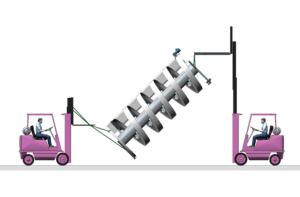 Most Spirals ship in one piece and leave our factory pre-assembled and pre-tested. Installation is generally an efficient process and reduces time for implantation and integration.
Our Spirals and components are designed for reliability, low maintenance and long life. They have an impressive up-time record reducing the total cost of ownership.
Click below to read details about more of our features:
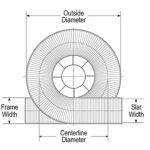
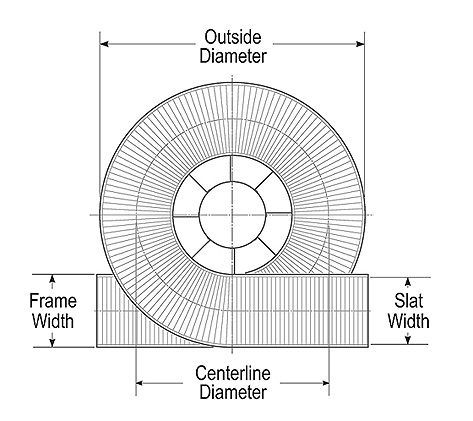
The proprietary low friction chain slat belt allow Ryson Spiral Conveyors to operate within a small footprint, saving valuable floor space. See the chart below for specific dimensions on our most popular models.

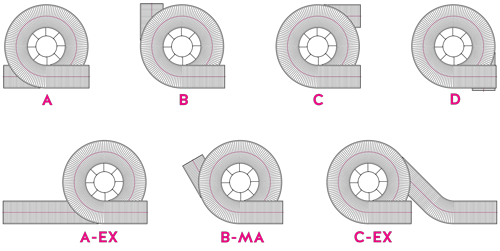
Our innovative modular design allows Ryson to customize any spiral conveyor with ease and can also be economically modified in the field to accommodate changing needs. All spiral conveyors are made to order and can operate up or down in a clockwise or counterclockwise rotation and can optionally be reversible. The position and length of the in feed tangent on up spirals and out feed tangent on down spirals can be customized to meet specific layout requirements.
All Ryson Spiral Conveyors are made to order and comes in a wide range of sizes and configurations.
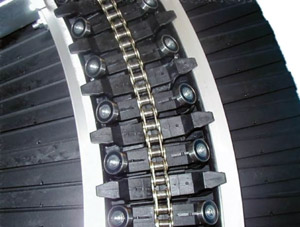 This innovative belt enables a low rolling friction operation without any sliding movements or wear strips on the spiral conveyor. The belt is pulled by a heavy duty steel roller chain and the slats are supported by precision steel roller bearings which ride on a polyurethane surface. This arrangement effectively takes up the side forces created by a tight radius and at the same time increases the load carrying capacity of the belt up to 75 lbs per linear foot. This enables the spiral conveyors to start and stop fully loaded and facilitates high speed, low noise and long life.
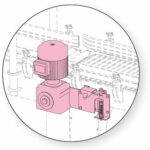
All Ryson Spiral Conveyors are equipped with an automatic chain tensioning device and built-in overload protection as a standard. This helps save both the Spiral and the product it is conveying.
Our proprietary chain slat belt assures a low noise operation, less than 75 db in most cases.
The Ryson modular design makes it easy to field modify our spirals in case of unplanned installation changes or to reconfigure and repurpose the spirals at a later date. Click to see some examples:
The Spiral Conveyors convey loads up or down in a continuous flow, facilitating high throughput. Many spirals can operate at speeds in excess of 200 FPM and are optionally reversible.
 Ryson Spirals are designed for low maintenance and long life. Only high quality components are used throughout. All bearings are sealed for life and need no further lubrication. The chain is of heavy duty nickel plated construction and needs only infrequent lubrication. The slats are made of a nylon composite, need no maintenance and can easily be replaced as single components without the use of special tools. Ryson has a full staff of factory trained service technicians ready to assist. All of our service techs are PMMI Certified Trainers. All of these factors contribute to Ryson’s low total cost of ownership.

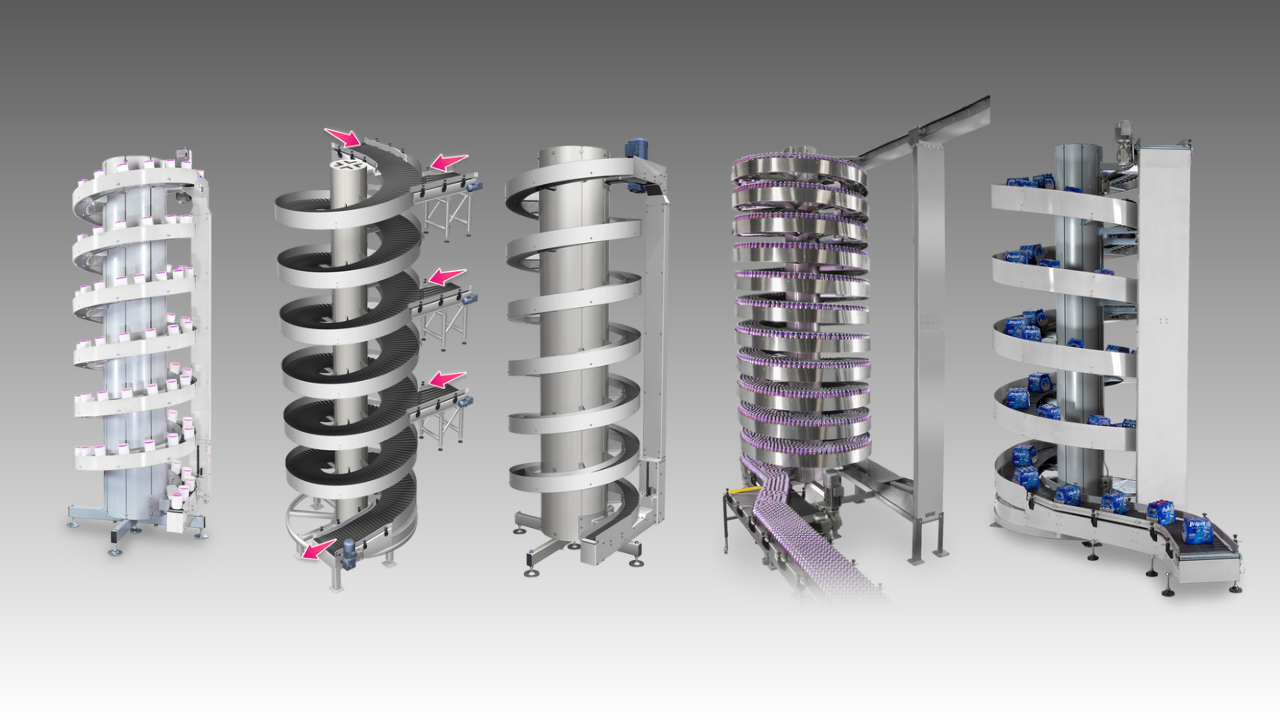
When should you choose a multiple infeed spiral conveyor?
Choose a Multiple Infeed Spiral when your operation needs to move stable unit loads between several elevations while preserving floor space and maintaining continuous product flow. It is especially useful when one spiral can serve multiple pick-module levels, packaging lines, mezzanine levels, or production areas.
 Choose this solution when:
- You need controlled product flow from multiple levels.
- Floor space is limited and long inclines are impractical.
- You handle cartons, cases, totes, trays, or packaged unit loads.
- You want one vertical conveying solution to replace several separate elevating conveyors.
Why choose Ryson for multiple infeed spiral conveying?
Ryson Multiple Infeed Spirals combine application-specific engineering with proven Spiral Conveyor design. Ryson manufactures the Spiral, induction conveyors, and divert conveyors to work together, which helps reduce transfer risk and improve product handling at intermediate elevations.
- Proprietary induction and divert conveyors designed for the spiral radius and pitch.
- Special rounded friction inserts for controlled side movement and reduced back-sliding.
- Integrated traffic controls for multi-level entry and exit points.
- Modular, made-to-order design for custom layouts and future field modification.
- Single-drive, low-friction chain-slat design for energy, controls, and integration savings.
- Pre-assembled and shop-tested equipment to support efficient installation.
- Low-maintenance construction and factory-trained service support.