



 Dust, Spillage and contaminants may seem unavoidable in bulk material handling. However, your vertical conveying design determines how much dust you actually create. It also determines how much escapes into your facility.
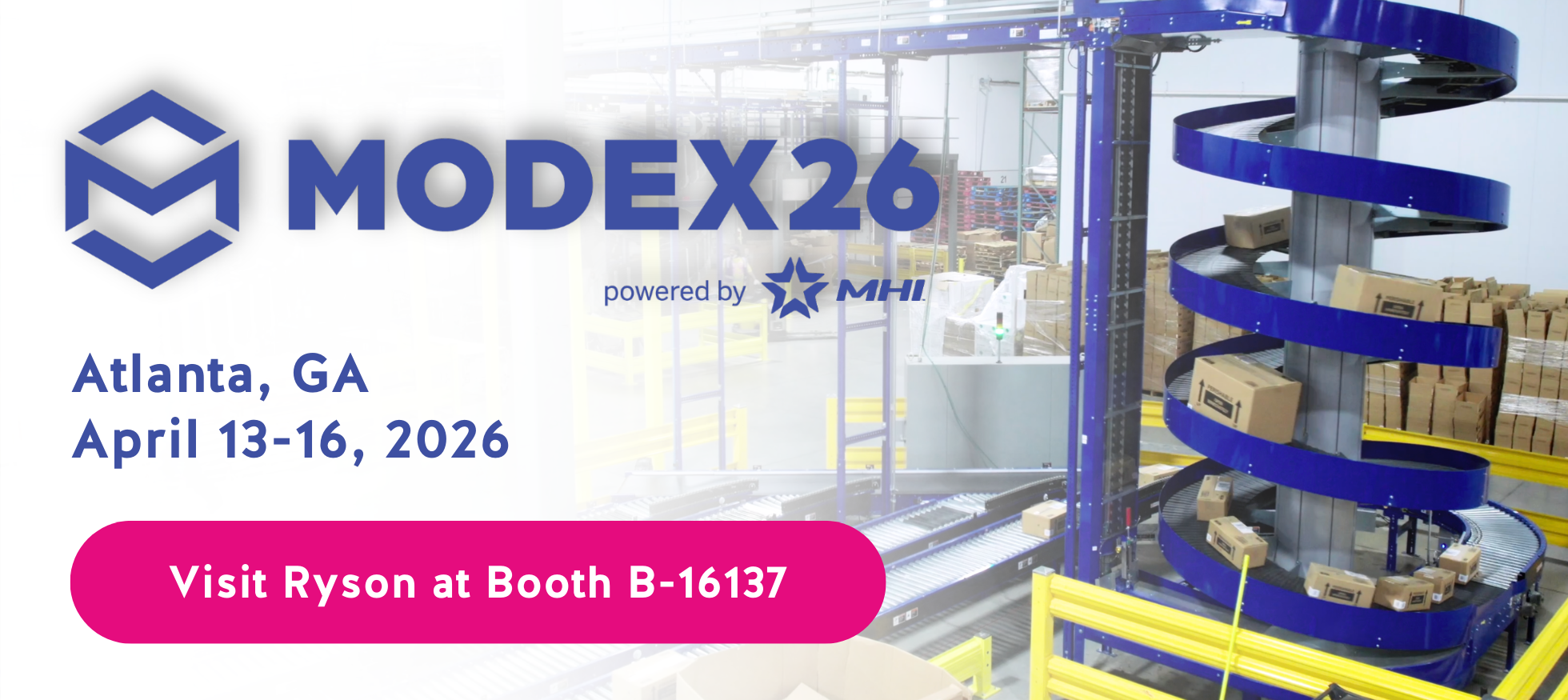
Check out Ryson at Modex 2026!
MODEX 2026 is almost here, and Ryson is preparing to showcase solutions that transform vertical conveying in modern warehouses and distribution centers. Next month in Atlanta, supply chain professionals will gather to explore the newest technologies shaping intralogistics. If you plan to attend, make sure Ryson is on your booth visit list.
Better yet, Ryson can provide complimentary registration to MODEX 2026. Contact our team to receive your FREE pass and experience the show firsthand.
 Why MODEX Matters for Warehousing and Logistics
MODEX brings together leaders in automation, material handling, and supply chain technology. For warehouse operators and system integrators, the event offers a rare opportunity to evaluate solutions that improve throughput, reliability, and space utilization.
Vertical conveying remains a critical part of modern facility design. Distribution centers continue to build upward, not outward. As a result, companies need equipment that moves product efficiently between levels without sacrificing valuable floor space.
That is where Ryson comes in.
 See the Ryson Demo Loop Running Live
At our booth, visitors can experience our fully operational demo loop, designed to illustrate the real-world performance of Ryson Spiral Conveyors in automated environments. The demo highlights multi-tier high-capacity conveying, smooth product transfers, and controlled product orientation during diversion.
For example, our High Capacity Spirals feature overlapping slats and a heavy-duty chain that can handle up to 75 pounds per linear foot and 3,600 pounds fully loaded, while achieving speeds up to 200 feet per minute.
You will also see several design features that improve system reliability and product handling:
-
MDR induction conveyors with friction-coated rollers ensure smooth product transfers into the spiral.
-
Powered divert arms and low-friction divert conveyors maintain product orientation during discharge.
These elements demonstrate how Ryson integrates Spiral Conveyors into larger multi-level warehouse automation systems.
Built for Real Distribution Environments
The demo loop also showcases several engineering advantages that matter in daily operations.
Ryson Spiral Conveyors feature modular construction, which simplifies customization and makes field modifications easier during installation or expansion. The systems also deliver high uptime, energy efficiency, and long operational life.
These capabilities make Ryson equipment a strong fit for:
-
E-commerce fulfillment centers
-
3PL distribution operations
-
high-speed sortation systems
-
cold storage environments
Because the design uses rolling friction instead of sliding contact, the equipment handles heavy loads while reducing wear and maintenance demands.
Meet the Ryson Team at MODEX
MODEX also provides an opportunity to talk directly with the Ryson team. Our engineers and application specialists will be available to discuss facility layouts, retrofit opportunities, and vertical conveying strategies for complex warehouse environments. Also present will be members from our service team, to answer any installation, integration and maintenance issues for you.
Whether you are planning a new facility or optimizing an existing operation, a conversation with our team can help uncover new ways to improve throughput and system reliability.
Join Us in Atlanta
MODEX 2026 takes place next month in Atlanta, and we look forward to seeing you there. Stop by the Ryson booth
B16137, watch the demo loop in action, and learn how our Spiral Conveyors help warehouses move products faster, safer, and more efficiently.
And remember—Ryson can provide free registration to the show. Reach out to our team today to claim your pass.
Preventive Maintenance, Cleaning, and Inspection for Spiral Conveyors
A simple maintenance routine keeps Ryson Spiral Conveyors reliable, efficient, and safe. Regular cleaning, inspection, and preventive maintenance reduce downtime and extend equipment life.
Vertical conveying systems operate continuously in demanding environments. That reality makes proactive maintenance essential. Fortunately, Ryson Spiral Conveyors are designed for durability and straightforward service access. With the right routines, maintenance teams can keep Spirals running smoothly for years.
 Prefer talking to someone from the Ryson Service Team?
Get in touch with our service team right away!
service@ryson.com | 757.898.1530
Why Preventive Maintenance Matters
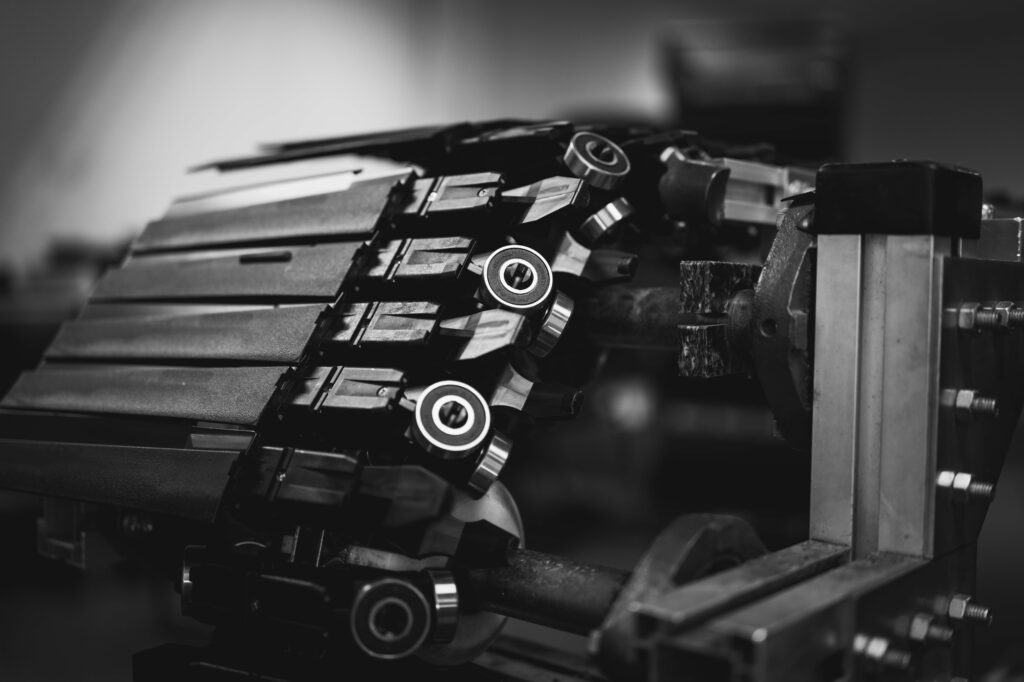
Preventive maintenance protects throughput and reduces unexpected downtime. Crucial for any operation.
Regular inspections help technicians identify wear, misalignment, or debris before they cause system failures. Early detection often prevents costly repairs and production interruptions.
Routine checks also improve safety. Maintenance programs verify that guards, sensors, and emergency stops function properly. A structured maintenance approach protects both equipment and personnel.
Additional resources:
 Read the Ryson Preventative Maintenance Sheet
Ryson Spare Parts & Service Page
Practical Cleaning Practices
Clean equipment operates more efficiently and avoids unnecessary wear. Product debris or dust accumulation can affect moving components or create sanitation concerns in sensitive environments.
For Ryson Spirals, cleaning routines should focus on three areas:
-
Infeed and discharge zones: Remove product debris or packaging fragments that could interfere with smooth product flow.
-
Slats and tracks: Inspect surfaces for buildup and wipe them clean during scheduled shutdowns.
-
Drive and motor area: Ensure ventilation openings remain free from dust or obstruction.
Modern drive technology can further reduce maintenance demands. For example, efficient motors used in Ryson Spirals deliver reliable operation while lowering energy losses and improving long-term performance.
Routine Inspection Checklist
A consistent inspection schedule allows maintenance teams to detect small problems before they escalate.
Daily checks
- Confirm no slats are missing or damaged.
- Look for unusual noise or vibration.
- Verify smooth product flow at infeed and discharge.
Weekly checks
- Inspect chain tension and adjust if necessary.
- Confirm proper speed matching with surrounding conveyors.
- Examine sensors and safety circuits.
Monthly checks
- Inspect sprockets and chain for wear.
- Check mounting bolts and fasteners.
- Review motor performance and temperature.
Proper chain tension remains one of the most critical factors in Spiral performance. Incorrect tension can accelerate wear and reduce system reliability.
Design Features That Simplify Maintenance
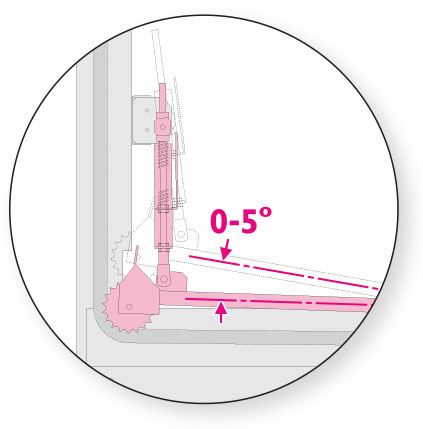 Well-designed vertical conveyors reduce maintenance effort from the start. Ryson Spirals emphasize accessibility, durable components, and long service life. These features allow technicians to inspect key components quickly and safely. There are for example visual cues that upon quick inspection can let you know if the chain needs tightening.
Efficient motors, robust chain systems, and compact drive designs also contribute to dependable operation. Combined with consistent maintenance routines, these features deliver lower lifecycle costs and predictable performance.
The Takeaway
Cleaning, inspection, and preventive maintenance should remain simple and consistent. A clear maintenance schedule keeps Ryson Spiral Conveyors running reliably while protecting productivity.
Facilities that adopt proactive maintenance rarely face unexpected downtime. Instead, they gain dependable vertical conveying and a system that performs efficiently year after year.
Which additional Ryson Services are there?
Ryson offers Tailored Maintenance Contracts for your Spiral and Spare Parts Kits. Both can prevent unforeseen downtime and ensure your line is running as it should – reliably and efficient.
Average DCs Are Wasting Space. Here’s Why…
Most distribution centers are sitting on more usable space than they think. And much of it can be unlocked with better vertical design.
What’s the hidden cost of “normal” warehouse layouts?
 It’s wasted space. Let’s look at it:
Walk through a typical American distribution center (DC) and you’ll see what looks like a busy, full building: racks to the ceiling, forklifts moving constantly, docks humming. But when you look at how the space is actually used, a different picture appears.
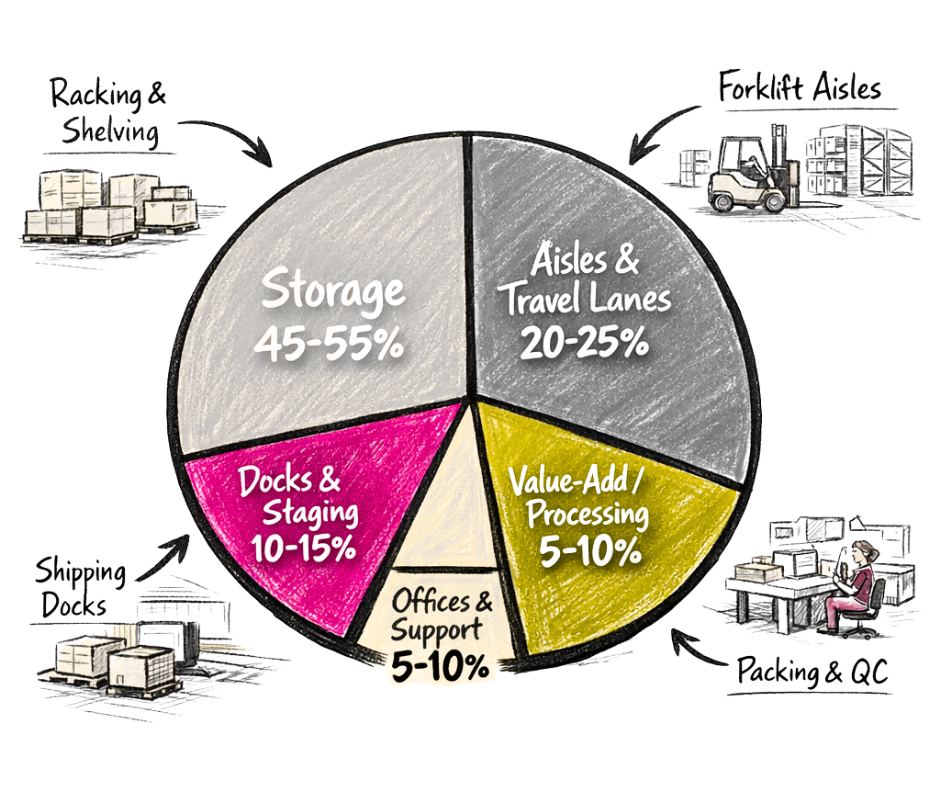
On average, a DC’s floor space breaks down roughly like this:
-
Storage (racking, pallet positions, bin shelving) 45-55%
-
Aisles and travel lanes 20-25%
-
Docks and staging (shipping/receiving buffer zones) 10-15%
-
Value‑add areas (kitting, packing, QC, returns) 5-10%
-
Offices, break rooms, utilities, maintenance 5-10%
Individually, all of these are necessary. The problem is the balance between them and especially how much of the building’s volume is consumed by horizontal movement rather than actual storage or value‑add work.
Industry benchmarks often show: Many warehouses operating around 40–70% overall space utilization. Good performance in the 70–85% range. That 10 to 25% gap points of potential capacity. That’s where a lot of money is being wasted, or where a lot of savings could be made, depending on what you decide to do.
Where do DC’s waste the most space?
When operations teams look for more capacity, they often jump straight to “we need a bigger building” or “we need more racks.” Yet a lot of the underutilized space isn’t empty shelves; it’s layout‑driven waste.
Common culprits:
-
Over‑wide aisles sized for convenience, not throughput requirements.
-
Long horizontal conveyor runs and travel paths cutting through prime floor space.
-
Underused vertical cube above low mezzanines or short rack lines.
-
Fragmented flows that force product to snake across the building multiple times.
As a result, it’s not unusual for a DC to have 15–30% of its footprint functionally wasted—space that can’t be used for storage because it’s tied up in traffic lanes, conveyor spurs, or inefficient routing.
 Thinking vertically: What does that mean for Warehousing?
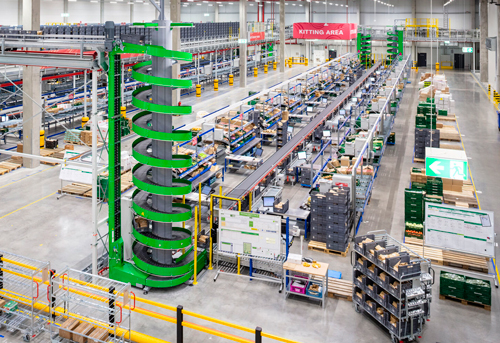
Instead of having a traditional horizontal mindset when it comes to your warehouse or distribution center, start thinking about how the vertical space can be utilized. This gives you a lot of flexibility and expansion can happen within the current building. This saves a lot of money.
One of the most effective ways to reclaim that waste is to rethink how you move product between levels and processes.
Traditional horizontal conveyors and long forklift routes tend to consume large strips of floor space. They lock in a “flat” layout that’s hard to densify later. Using too many forklift solutions also force compromises on where you can place racks and workcells.
How vertical conveying — especially with Spiral Conveyors — flips that equation:
-
You trade long horizontal runs for tight vertical footprints.
-
Product moves up or down in a small, controlled area.
-
The aisles and zones that were once dedicated to travel can be converted into storage, value‑add, or staging.
In practice, that can help unlock part of that 15–30% wasted area by:
-
Shortening travel distances between mezzanines and ground level.
-
Allowing denser racking where conveyors used to run.
-
Freeing up clean, contiguous zones for packing, returns, or kitting.
Why this matters now
For most operators, adding new square footage is expensive and slow. Optimizing existing space, on the other hand defers or avoids building expansions and relocations. It also increases capacity without adding headcount at the same pace. Moreover it improves safety by reducing traffic conflicts and cluttered aisles.
If you can increase effective capacity by even 10–15% inside the four walls you already pay for, simply by redesigning flows and going vertical. That’s a major ROI lever!
A low‑risk, high‑impact approach
The key is to treat space as a strategic asset, not a fixed constraint:
-
Map where your current square footage goes: storage, travel, docks, offices.
-
Identify long horizontal moves and “dead zones” around conveyors and ramps.
-
Ask, “What could this space be if vertical movement was compressed into a smaller footprint?”
Ryson Spiral conveyors are one of the tools that make that shift possible, especially in retrofit or expansion‑by‑optimization projects. Instead of redesigning the entire building, you can surgically convert wasted horizontal space into vertical capacity and give that floor back to storage and value‑add operations.
If you’re ready to get more out of your space, feel free to connect to our team!
Conveying of Bulk Materials: Avoiding Dust, Spillage and Contaminants
Every transfer point, bucket fill, and discharge creates an opportunity for spillage. Traditional vertical systems often amplify the problem. Open bucket elevators leak dust through gaps and poorly sealed doors. Improvised chutes create turbulence that throws fines into the air. Steep belts and vertical screws overflow at the inlet can generate chronic dust clouds. Adding a dust collector to a leaky system rarely solves the root issue.
As a result, operators fight constant cleanup, product loss, and compliance concerns. ATEX and NFPA standards demand more than surface fixes. They require a fundamentally contained design.
A containment-first approach starts with a fully enclosed product path. It reduces transfer points and controls how product enters and leaves the system. Just as important, it handles material gently to prevent breakage in the first place.
Where Do Traditional Designs For Vertical Bulk Conveying Fall Short?
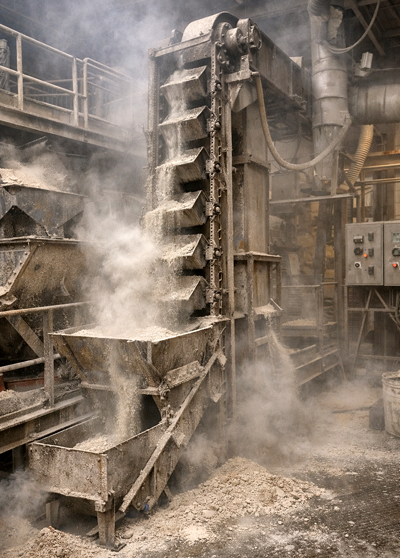 A lot of legacy equipment was never designed with modern dust and explosion standards in mind. Typical weak points include:
-
Open or partially enclosed bucket elevators
Wide gaps at infeed and discharge, poorly sealed inspection doors and unsealed casings allow dust to escape and settle on surrounding structures. -
Improvised transfer chutes
“Homemade” chutes between horizontal and vertical sections often lack proper sealing, skirting or stilling zones. Impact and turbulence throw fines into the air rather than containing them. -
Vertical screw or belt conveyors with open inlets
When bulk solids are fed aggressively into a vertical screw or steep belt, material can overflow, leading to chronic spillage and dust plumes at the feed point. -
Aging equipment upgraded only with external dust collectors
Adding a dust collector to a fundamentally leaky, poorly sealed elevator casing may reduce airborne dust, but product loss and build‑up often remain.
These solutions may move the product, but they typically make it harder to keep floors clean, comply with ATEX/NFPA, and maintain a safe working environment.
A containment‑first approach to vertical conveying focuses on a fully enclosed product path, controlled filling and discharge, and reduced transfer points. Well‑sealed casings, guided product flow and compact vertical footprints help minimize both dust generation and escape paths. Service‑friendly access is critical, too: if doors and panels are difficult to use, cleaning and inspection get skipped, and build‑up turns into a safety and reliability issue.
This is where modern enclosed bucket elevator designs, like Ryson’s, come into play.

How Do Enclosed Bucket Elevators Help?
A continuous, well‑sealed casing around the material stream keeps dust and fines where they belong: inside the system. Gentle bucket filling and discharge reduce product degradation and the creation of fines. By combining true vertical conveying with a compact footprint, these elevators often eliminate multiple transfer points and long inclined runs that would otherwise generate spills and dust at each change of direction. And because the system is enclosed by design, integrating ATEX/NFPA measures such as explosion vents and isolation devices becomes more straightforward.
Enclosed bucket elevator designs, like the Ryson Bucket Elevator become a containment system themselves, instead of treating dust as an unavoidable side effect. Here’s a breakdown of how they support your operation:
-
Fully enclosed casings
Continuous casings with tight flanges, properly gasketed panels and well‑designed inspection doors drastically limit the escape paths for dust and fines. -
Gentle product handling
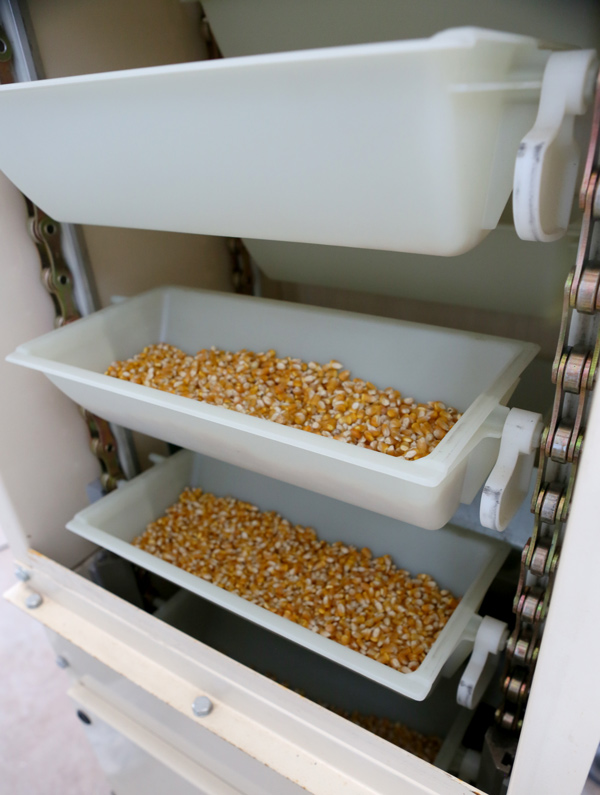
Carefully engineered bucket filling and discharge reduces product breakage as seen in scooping buckets and screw transfers: Whereas our Gentle handling pendant buckets in turn reduce the generation of dust and unusable product.
-
Compact, vertical footprint
With a true vertical conveying path, you can often eliminate multiple transfer points and long inclined runs that otherwise create spills and dust at each change of direction. -
The Ryson Bucket Design features a pendant traveling system, where the buckets travel while maintaining orientation preventing accidental spillage
-
A closed design makes it easier to implement ATEX/NFPA measures such as explosion vents, sensors and isolation devices where required.
The result is not only a cleaner installation, but also less product on the floor, fewer cleanup hours and a safer working environment around the elevator.
 What sets the Ryson Bucket Elevator apart?
The Ryson Bucket Elevator is designed from the ground up with containment, gentle handling and safety in mind. Its fully enclosed housing, tightly sealed inspection doors and guided bucket path help keep dust and fines inside the system instead of in the surrounding area, which directly supports cleaner operation and easier compliance with ATEX and NFPA requirements.
The gentle filling and discharge of the buckets reduce product breakage, lowering the amount of fines generated in the first place and protecting sensitive or high‑value bulk materials. It also aids in avoiding dust, spillage and contaminants.
Because the elevator conveys vertically in a compact footprint, it can replace long inclined runs and extra transfer points that typically cause spillage and dust at every change in direction. Together, these design choices help operators reduce maintenance, minimize product loss and create a safer environment around their vertical conveying equipment.
Enclosed bucket elevators are not a one‑size‑fits‑all solution, but they sit in a sweet spot for many dusty, combustible or high‑value bulk products where dust control, product loss and safety are non‑negotiable. For your next project, asking simple questions—How many transfer points can we eliminate? Is the product path truly enclosed? How does this help us meet ATEX/NFPA obligations over the long term?—will quickly show whether your vertical conveying concept is ready for today’s demands.
Update From Pack Expo East
Ryson at Pack Expo East
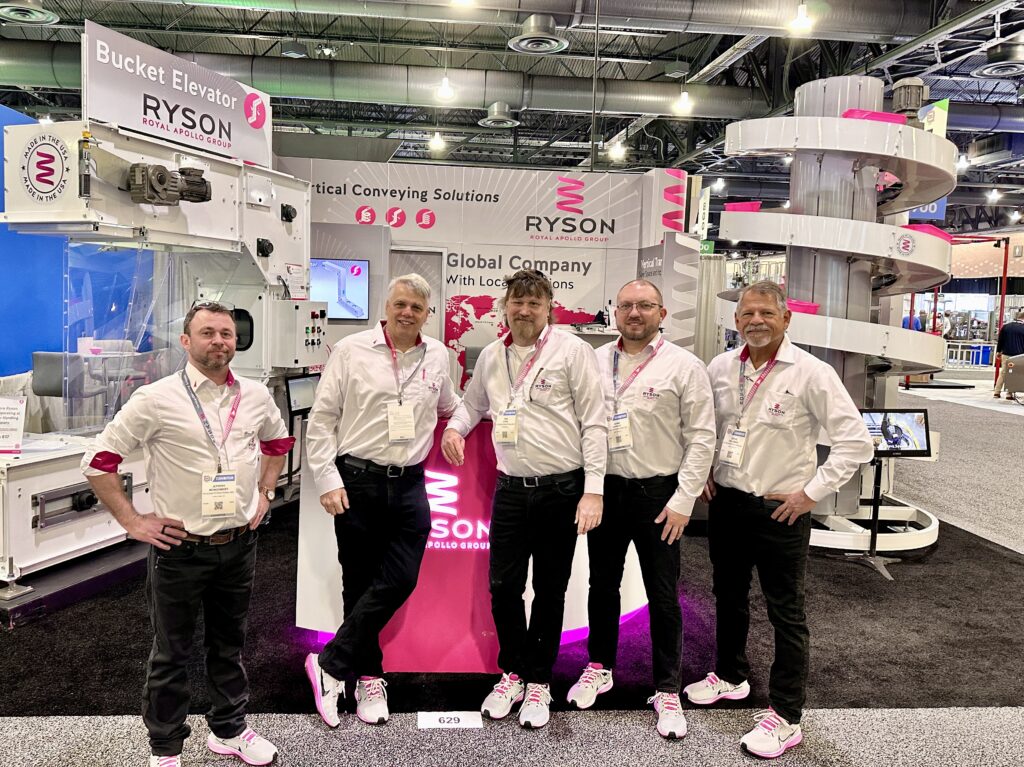 For Ryson, Pack Expo East 2026 centered on meaningful conversations. We connected with professionals ready to elevate their vertical conveying strategy. Instead of chasing volume, we focused on quality conversations. As a result, every discussion delivered insight and opportunity.
Compelling Conversations with Integrators and End Users
This year, quality clearly outweighed quantity at our booth. Integrators and end users came prepared with focused questions. They wanted to improve system optimization, boost efficiency, simplify maintenance, and maximize ROI.
Because Pack Expo East is a regional show, we spent more time with each visitor. Many attendees don’t typically travel to the larger Pack Expo events. Therefore, the setting allowed deeper technical discussions and stronger relationship building. Our local integrator partners also brought customers directly to our booth. That direct collaboration created real momentum on active projects.
Throughout the show, our team explored how Ryson Spiral Conveyors support larger turnkey systems. We demonstrated how Spirals streamline layouts and free up valuable floor space. We explained how our single motor design reduces complexity. Most importantly, we showed how reduced maintenance demands help lower operating costs over time.
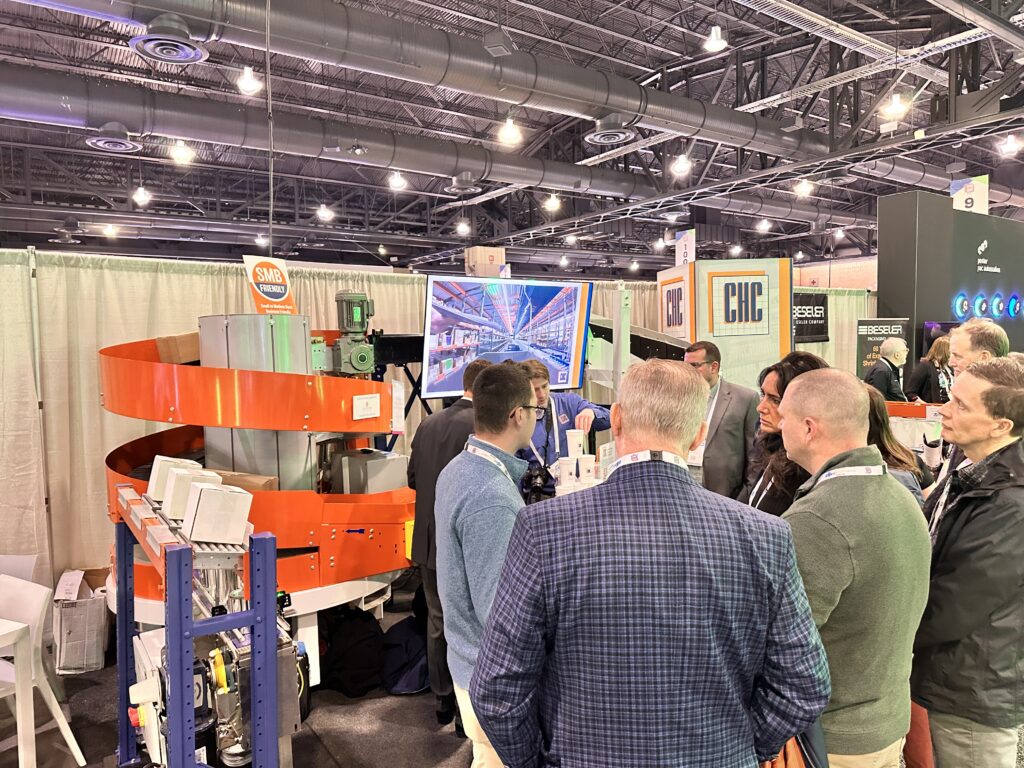
Partner Spotlight: CHC at Pack Expo East
Another highlight came from our integrator partner, Conveyor Handling Company (CHC). CHC featured a Ryson Spiral in their booth, which reinforced the strength of our partnership. Their display allowed attendees to see our technology integrated within a broader system solution.
We take pride in supporting our integrators with more than brochures. We provide demo Spirals for showrooms and trade shows. Additionally we help partners present real equipment that proves performance and reliability. That hands-on approach builds confidence and drives project success.
Looking Ahead
Pack Expo East 2026 delivered strong engagement and valuable connections. Each conversation strengthened the collaborative foundation that moves us forward. From engineers and maintenance teams to plant managers and system designers, we left inspired by the shared focus on efficiency and innovation.
Now, we turn our attention to MODEX in April in Atlanta, GA. We look forward to continuing the conversation and helping more facilities optimize their vertical conveying systems with Ryson Spiral Conveyors.
TCO – What is Total Cost of Ownership?
When businesses invest in industrial equipment, it’s easy to get tunnel vision. We often focus on the “sticker price”, number at the bottom of the quote. Oftentimes forgetting that an industrial asset is a decades-long relationship, not a one-time transaction.
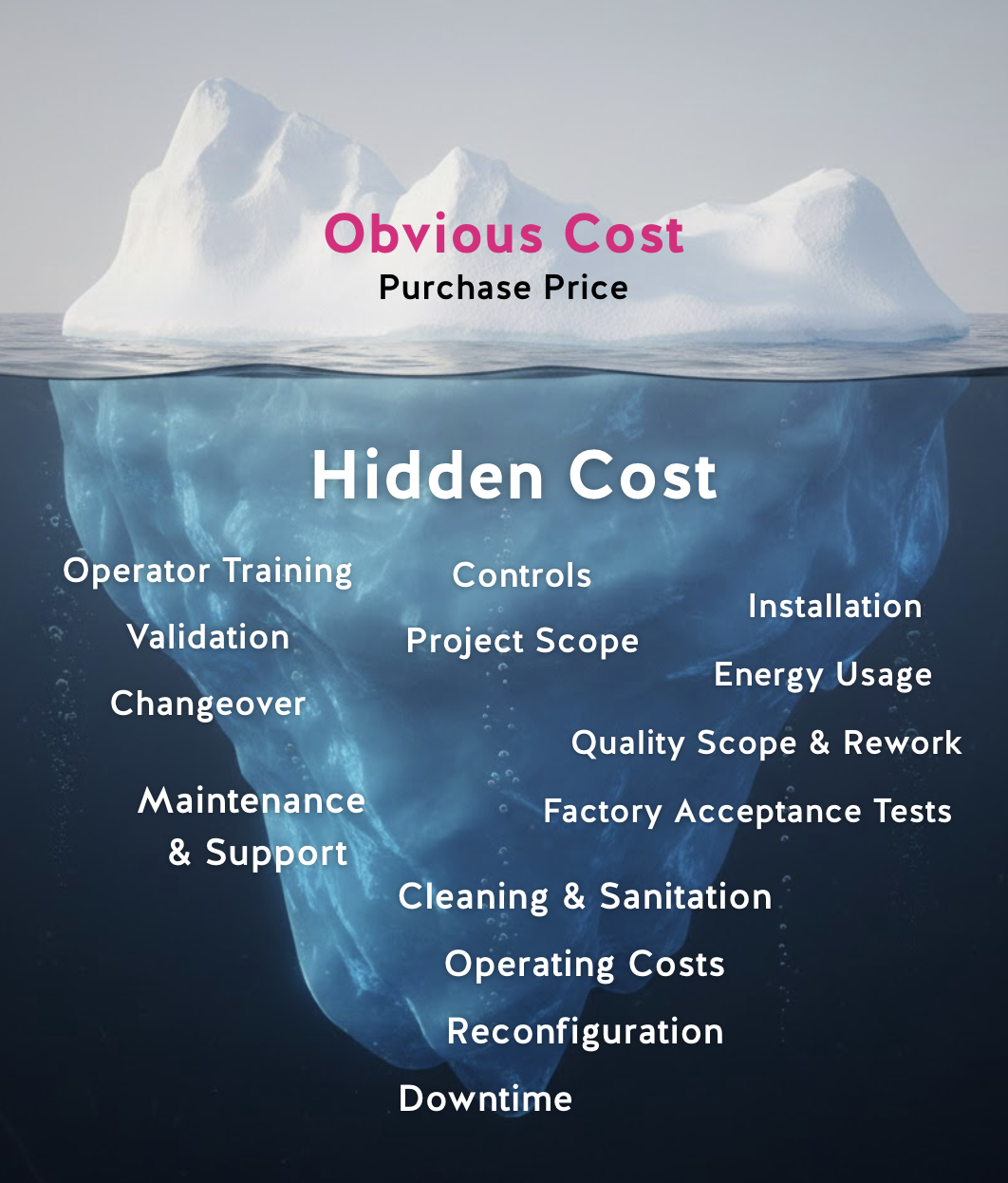 This is the core of Total Cost of Ownership (TCO).
In an industrial setting, focusing solely on the initial capital expenditure (CAPEX) is like looking at the tip of an iceberg while ignoring the massive, submerged mass that can sink your operational budget. A truly successful investment isn’t just about what you pay today; it’s about what you keep paying over the next ten to twenty years.
The True Cost of Industrial Assets
Understanding TCO requires looking at the full lifecycle of a machine. Generally, these costs fall into two distinct categories:
-
Acquisition Costs: This is the visible “tip.” It includes the purchase price, of course, but also the logistical hurdles like shipping, customs duties, and the complex process of installation and setup.
-
The “Hidden” Long-Tail Costs: This is where the budget often bleeds. It encompasses:
-
Operating Costs: The daily “rent” you pay to run the machine, from energy consumption and fuel to the personnel costs required for operation.
-
Training Costs: The specialized expenses for getting your workforce up to speed on new technology.
-
Maintenance & Support: The inevitable need for spare parts, routine servicing, and expert technical support.
-
Downtime and Poor Quality Costs: Perhaps the most painful of all. The lost productivity during maintenance or the financial drain caused by inefficiencies, breakdowns, and sub-par output.
-
What’s an example for TCO comparison?
As an example we can look at two vehicles, one with a low purchase price but that gets poor fuel mileage and requires frequent costly maintenance vs. another that has a higher purchase price but that gets good mileage and requires infrequent maintenance with reasonably priced components. Obviously the first will require less initial investment but with time it will cost more to “own” especially if used frequently and for long distances. If you include other less tangible costs like loss of use, or substitution costs, when the resource is unavailable because of repair and incidental costs like towing when the vehicle unexpectedly breaks down, the total cost of the initially less expensive option becomes rapidly more expensive to own than the other option.
TCO in Vertical Conveyance: The Ryson Spiral
When we apply this lens to vertical conveyance, the Ryson Spiral stands out as a prime example of why TCO matters more than the initial quote.
Ryson’s spirals are designed and manufactured to provide a lower total cost of ownership (TCO) when considering all costs associated with owning and operating equipment for vertical transportation of goods; initial price, shipping, installation, operation, maintenance, consumables, and reconfiguration.
Let’s break it down…
How Do Ryson Spirals Lower Your Cost of Ownership?
When evaluating total cost of ownership, vertical conveying becomes a long-term business decision, not a simple purchase. This is where the Ryson Spiral clearly stands apart.

Space efficiency
Space savings delivers an immediate return. A Ryson Spiral can reduce floor space requirements by up to 75 percent compared to traditional incline conveyors. That reclaimed space can delay building expansions or free room for new production lines. In facilities where floor space can cost more than $100 per square foot, those savings add up quickly.
Energy efficiency
Low energy consumption further reduces lifetime operating costs. Ryson Spirals use a low-friction conveying surface that moves product vertically with just one low horsepower motor. Traditional incline systems often require multiple conveyors and drives to achieve the same elevation change. In facilities operating dozens, or even hundreds, of conveyors, reducing the total number of motors can significantly lower annual energy use. Those savings appear directly on utility bills while also reducing heat and electrical load across the facility.
Durability
Durability also plays a critical role in total cost of ownership. Ryson Spirals use a single, continuous belt with fewer moving parts than modular conveyor systems. As a result, maintenance requirements can drop by 30-40 %. Fewer wear components reduce unplanned downtime, limit spare parts inventory, and extend service intervals. In high-throughput operations, avoiding even a few hours of downtime each year can protect substantial revenue.
 Flexibility
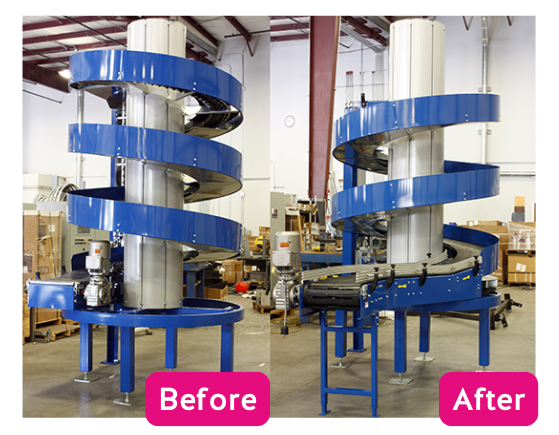
Future-proofing further protects long-term capital investment. Ryson Spirals can be reconfigured, repurposed, or relocated as operational needs change. Instead of replacing equipment, operators extend its useful life. At the end of service, major components remain recyclable, reducing disposal costs and supporting sustainability goals.
Taken together, these advantages change the cost conversation. Ryson Spirals may not always carry the lowest initial price. However, when space savings, energy efficiency, reliability, and adaptability are considered, the Ryson Spiral consistently delivers a lower total cost of ownership.
You can find more information on our Spiral product page or by contacting Ryson at sales@ryson.com.
Two Pre-Built Ryson Spirals Available for Immediate Sale
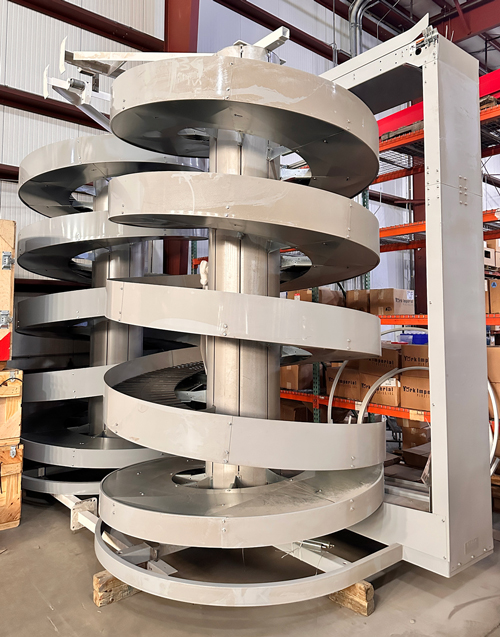 Pre-Built Ryson Spirals Available for Immediate Sale
Production timelines can shift quickly, and when equipment arrives late, entire systems feel the impact. To help mitigate those risks, Ryson is offering a rare opportunity to secure pre-built Ryson Spirals with no build lead time.
Ryson currently has two fully assembled Spirals available for immediate shipment. Pre-built units like these are uncommon, making this a unique chance to keep projects moving without the typical production wait.
These Pre-Built Ryson Spirals meet the same engineering and quality standards as every Ryson Spiral Conveyor. They are not test units. They are not prototypes. These Spirals are production-ready machines designed for continuous operation in demanding environments.
What are they Suited For?
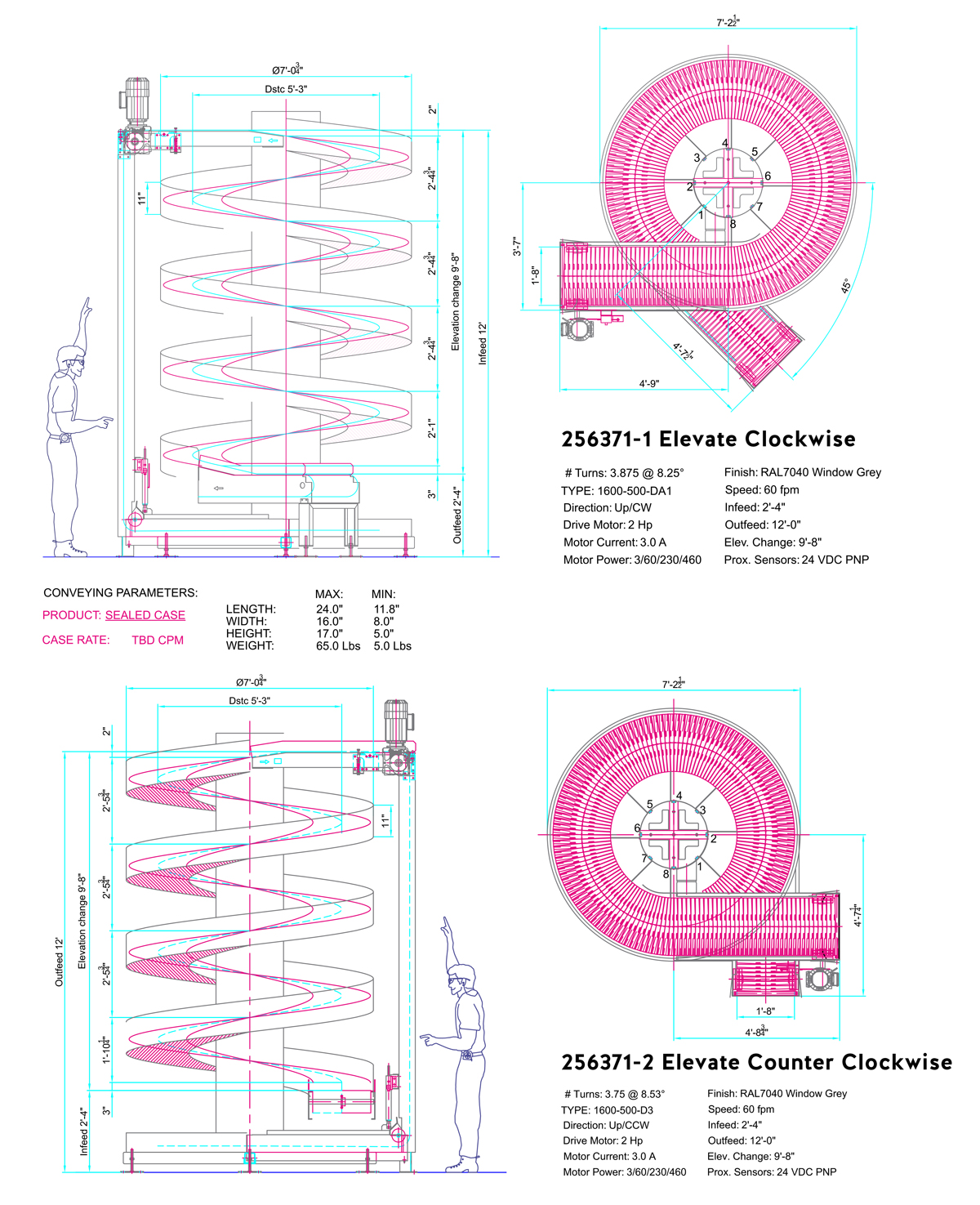
These Spirals were specified to handle sealed cases, roughly 24″ X 16″ with a weight of up to 65 lbs. So these spirals could be used at end-of-line in a packaging line, or conveying from one level to the next in a warehouse.
These Spirals may not fit your layout perfectly. But That’s ok. Because of thier modular design, we can modify these to fit the specifics of you application very cost effectively.
Detailed specifications for each unit are also available for download. Reviewing elevations, dimensions, and load ratings will help confirm application fit. Availability is limited, and once these Spirals are sold, the opportunity ends.
We recommend contacting your Ryson sales representative as soon as possible. Acting quickly improves your chances of securing one of these Pre-Built Ryson Spirals.
For facilities facing tight schedules, these Spirals can help keep projects moving. Faster delivery reduces installation delays and helps support expansions, retrofits, or unexpected capacity needs. In addition, because these Spirals are already built, they may be available at a deep discount compared to a new custom order. Speed and cost savings rarely align this well.
As a reminder, Ryson will exhibit at Pack Expo East in a few weeks. If you plan to attend, you can discuss these Spirals directly with our team at the show. It is an ideal setting to review specs, timelines, and next steps in person.
When speed matters, having a Spiral ready now can keep your operation on track.
Reduce Unplanned Downtime with a Ryson Spare Parts Kit

Unplanned downtime remains one of the most expensive risks in modern production environments. Every minute a line sits idle affects output, labor efficiency, and delivery commitments. That reality makes preparation just as important as performance. One of the simplest ways to reduce downtime starts with having the right spare parts on hand.
Industry studies estimate that unplanned downtime costs manufacturers between $5,000 and $50,000 per hour, depending on the operation. Additionally, in high-speed food, beverage, or packaging environments, that number often climbs higher. Lost production, idle labor, product waste, and recovery time all compound the cost. Against those figures, the price of a spare parts kit becomes almost negligible.
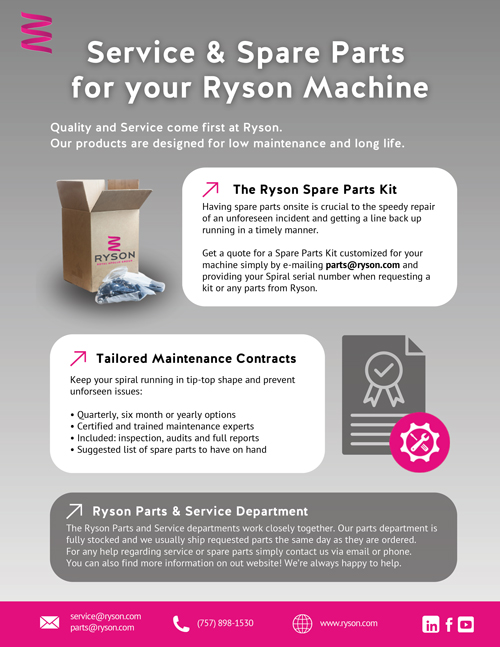
 What is a Spare Parts Kit?
A Spare Parts Kit includes a small set of components most likely needed if an issue occurs with a Spiral in the field or at an end user facility. The list stays intentionally short, and the cost remains minimal when compared to lost production from downtime. Ryson builds Spirals to the highest quality standards worldwide. However, even the best equipment cannot prevent every unforeseen issue. A small investment today can return value many times over the life of the Spiral.
Why are they important?
Keeping spare parts on site allows maintenance teams to respond quickly when an unexpected issue occurs. Instead of waiting for deliveries, teams can restore the line and resume production sooner. While Ryson can ship most parts the same day, parts already on hand reduce downtime even further. In an industry where time directly affects cost, preparation makes a measurable difference. It also supports peace of mind, giving Operations Managers and Maintenance teams confidence in today’s fast-moving workplace.
“The cost is very low compared to the cost of lost production due to downtime.”
Ryson customers often echo the same point. Even the most reliable equipment operates in real-world conditions. Wear, unexpected impacts, and environmental factors remain outside of any design control. Planning for those moments supports uptime without compromising long-term reliability.
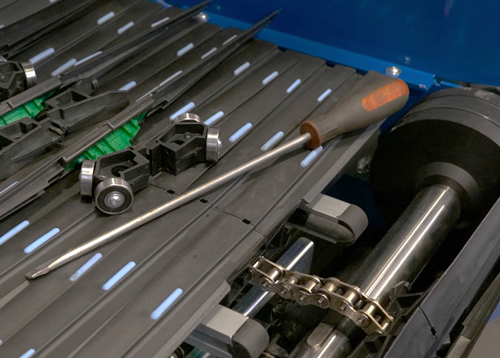
Having spare parts on hand shortens the repair window. Beyond cost savings, preparedness improves confidence across the plant floor. Maintenance teams respond faster. Operations managers also reduce stress during peak production periods. Consistency replaces uncertainty, even when challenges arise.
Ryson takes pride in building Spirals that perform reliably for years. Still, A spare parts kit protects that investment and often pays for itself many times over the life of the Spiral Conveyor.
Below is a general guide for what is included in a spare parts kit. Naturally, the actual parts and quantities would depend on the size and model of your Spiral. The exact list of suggested spare parts will be detailed in your Spiral Manual. If you don’t have the manual to your machine, you can request one here.
|
Description |
Suggested Quantity |
UOM |
| AA-3 Carrier black guide unit | 25 | PAIR |
| CC-3 Carrier black load unit | 25 | PAIR |
| Connector type 3 Black | 50 | EACH |
| Connector type 3 Green (Master Links) | 5 | EACH |
| Master Link | 5 | EACH |
| Conveyor slat right | 100 | EACH |
| Conveyor slat left | 100 | EACH |
| Friction Insert 75 Shore Black | 250 | EACH |
| Friction Insert 75 Shore Blue (For Master Links) | 20 | EACH |
| Polyurethane guide | 25 | FEET |
| Prox Switch 24VDC | 1 | EACH |
| Drive Shaft 40mm plus keys | 1 | EACH |
| Idler Shaft 40mm plus keys | 1 | EACH |
| Shaft Bearings 40mm bore | 2 | EACH |
| Sprocket ¾”x19T 40mm bore | 1 | EACH |
| SEW Eurodrive Gearmotor | 1 | EACH |
To support that commitment, the Ryson Parts and Service team remains available to assist with part selection, maintenance planning, and long-term system care. Their goal stays simple. Keep your Spiral running. Keep downtime low. Protect the performance you invested in.
Ryson Spirals Are SMART Vertical Conveying
Today’s production and warehousing environments demand efficient, flexible, and sustainable equipment. Ryson Spiral Conveyors meet those demands as SMART vertical conveying systems. They optimize space, reduce energy use, and deliver consistent performance.
Here’s what makes these Spiral Conveyors truly S.M.A.R.T.
 Sustainability
Ryson Spirals focus on energy efficiency and long-term value. Their low-friction design reduces power consumption and limits wear. Each spiral runs on a single motor, which simplifies operation and lowers energy demand.
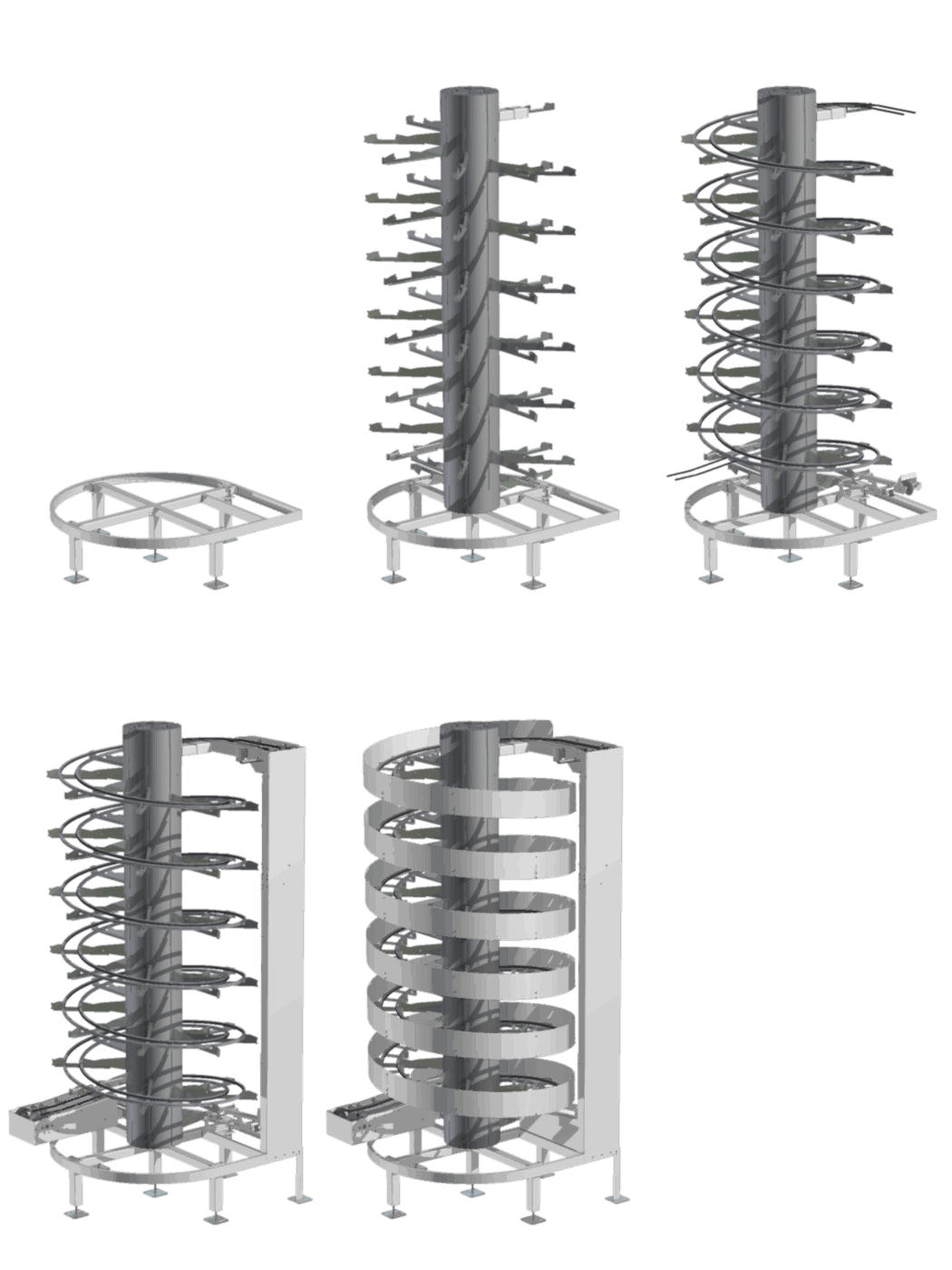 Ryson builds every Spiral using aluminum and steel. Both materials rank among the most recyclable and resource-efficient available. Fewer moving parts also mean fewer replacements over time. As a result, maintenance needs drop and service life increases.
Together, these benefits reduce environmental impact and lower total cost of ownership. Sustainability becomes a built-in advantage, not an added feature.
Learn more about our sustainability efforts.
 Modularity
No two facilities operate the same way. That’s why Ryson Spirals feature a modular design. Each unit adapts to existing conveyor lines and evolving layouts.
Facilities can reconfigure Spirals as production needs change. Instead of replacing equipment, teams reuse existing systems. This approach saves time, reduces waste, and protects capital investments.
Modularity allows your conveyor system to grow with your operation, not restrict it. 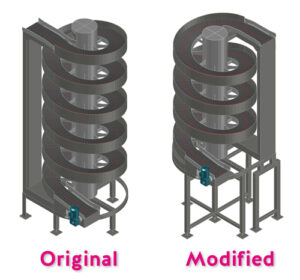
 Adaptability
Ryson Spirals handle a wide range of products with smooth, continuous flow. They support applications across food and beverage, e-commerce, packaging, and distribution. They are ideal for modernization projects.
Their compact footprint makes them ideal for upgrade projects because Spirals fit into tight spaces where traditional conveyors might struggle. Replacing outdated equipment can also drastically increase throughput and helps minimize disruptions. Facilities often gain throughput while reducing floor space.
 Reliability
Downtime costs money.
Downtime costs money and disrupts schedules.
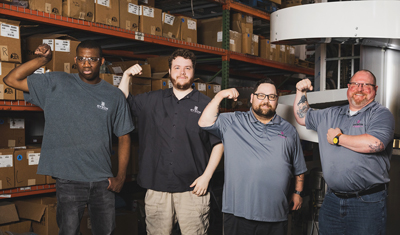
Ryson Spirals deliver proven reliability across global installations. Precision engineering and high-quality components support continuous operation. Decades of experience reinforce every design decision.
If issues arise, Ryson’s service and spare parts teams respond quickly. Support remains dependable long after installation.
 Technology
Innovation drives every Ryson Spiral. Integrated controls and smart configurations support modern production environments. Digital-ready designs prepare systems for future upgrades.
This focus on technology ensures your vertical conveying system stays relevant as operations evolve.
Choosing a Ryson SMART Spiral means investing in sustainability, flexibility, and long-term reliability. Read more detailed information on our SMART Spiral in this informative White Paper.
Connect with our team if you’re interested to learn more.