


















Ryson is the Number One Manufacturer of Spiral Conveyors in the USA


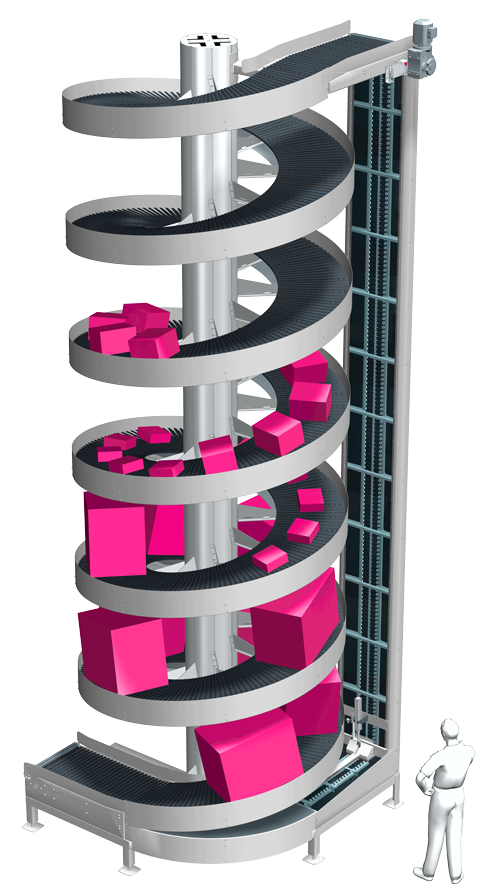
Use Ryson spiral conveyors to connect pick modules, mezzanines, sortation equipment, packing lines, conveyor networks, and automated fulfillment systems. Compact vertical movement helps distribution centers preserve floor space while maintaining product flow across multiple elevations.

Ryson conveyors support bottle, can, jar, case, tray, and packaged product handling in filling, packaging, accumulation, cooling, freezing, and distribution areas. Stainless, washdown, freezer, and application-specific configurations should be highlighted where relevant to sanitation and operating environment requirements.

For consumer packaged goods operations, Ryson systems help maintain flow between filling, labeling, cartoning, case packing, palletizing, accumulation, and warehouse transfer points. The value is not just elevation change; it is reliable line continuity in a compact footprint.

Ryson Vertical Conveying Equipment is well suited for industrial applications. They have a strong uptime record and can help solve production layout challenges. Solutions include buffering for cure or cool time, removing waste material for recycling, and measured bulk materials transport.

Ryson combines modular, made-to-order conveyor design with U.S. manufacturing, application engineering, global support, field-modifiable equipment, and product lines built for high uptime, low maintenance, and integration into automated production or distribution systems.
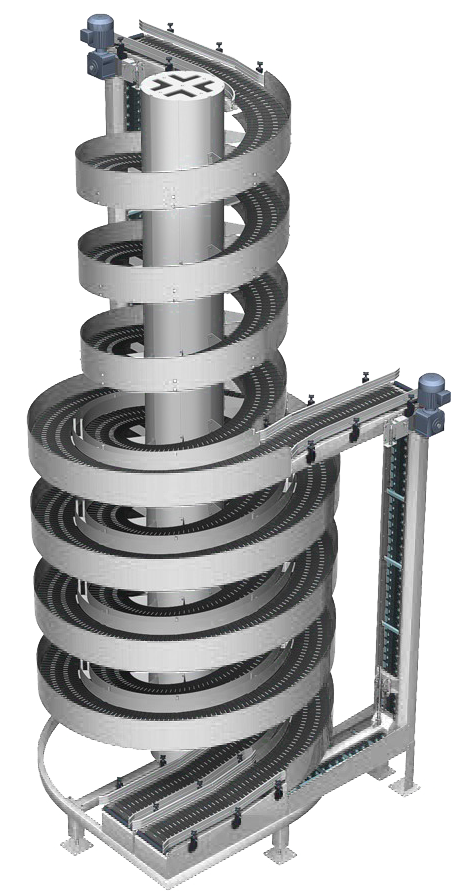
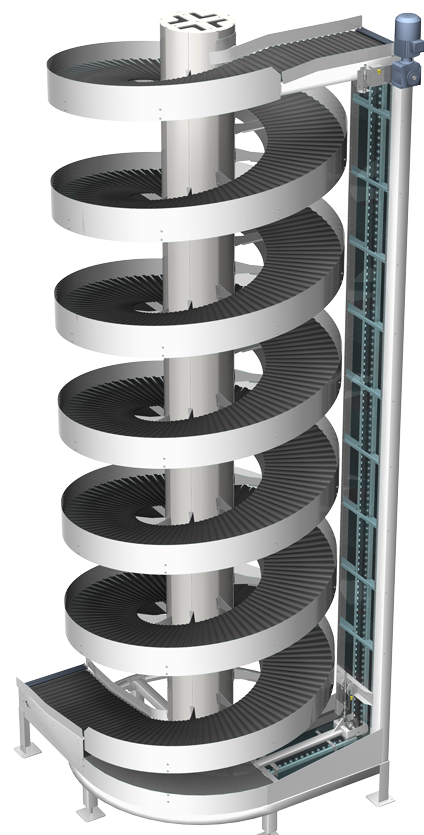
A Ryson Spiral Conveyor moves products vertically in a compact footprint while supporting continuous product flow. Compared with long incline conveyors or intermittent lifts, a spiral conveyor can simplify layout planning, preserve valuable floor space, and help maintain throughput in automated warehouses, packaging lines, and manufacturing operations.
A Ryson Bucket Elevator is designed for vertical and horizontal movement of bulk materials using pivoting buckets in an enclosed system. It is a strong fit when the application requires careful handling of bulk products, multiple inlets or outlets, and efficient vertical transfer through a compact path.
Ryson equipment is made to order, factory tested before shipment, and backed by application engineering, installation support, training, preventative maintenance, service contracts, and spare parts availability. Ryson’s modular design can also support future field modification and repurposing as production needs change.
Ryson manufactures vertical conveying solutions, including spiral conveyors, bucket elevators, rotating conveyors, slat conveyors, and vertical accumulation systems for industrial material handling and packaging applications.
Ryson serves warehousing and logistics, food and beverage, consumer packaged goods, industrial manufacturing, and bulk material handling operations that need reliable vertical product movement.
Yes. Ryson manufactures and tests equipment at its Yorktown, Virginia facility before shipment, which supports quality control, commissioning, and application-specific customization.
Yes. Ryson equipment is made to order and uses modular design principles, allowing configurations to fit application requirements, layout constraints, and future field modifications.
Ryson conveyors can handle cases, cartons, trays, totes, bottles, cans, jars, packaged goods, and selected bulk materials depending on the equipment model.
Ryson’s modular design supports field modification and future reconfiguration in many cases. This is important for facilities that may change product lines, layouts, automation strategies, packaging formats, or throughput requirements over time.
Capacity depends on product dimensions, weight, speed, spacing, accumulation requirements, incline/decline direction, transfers, and controls. Ryson should encourage an application review so engineering can recommend the right conveyor model, size, configuration, and operating speed.
Yes. Vertical conveying equipment is often integrated with upstream and downstream conveyors, controls, pick modules, packaging equipment, warehouse automation systems, and plant supervisory systems. Integration requirements should be reviewed early to confirm speed, transfers, controls, guarding, and maintenance access.
Buyers should provide product dimensions and weight, desired throughput, elevation change, available footprint, infeed/outfeed heights, operating environment, sanitation needs, controls requirements, drawings or layouts, and any integration constraints.
"*" indicates required fields