





When the 2026 FIFA World Cup was kicked off, the eyes of the world will focus on the pitch. Millions of fans fill world-class stadiums across the United States, Mexico, and Canada, while billions more tune in from home.
But long before the first goal is scored, an entirely different kind of team has been working around the clock: the global supply chain.
Co-hosting a 48-team, 104-match tournament across three massive nations is an unprecedented logistical feat. FIFA’s official logistics partners must manage the movement of over one million pounds of equipment, utilizing more than 5,000 specialized vehicles and one million square feet of dedicated warehouse space.
Behind the scenes, consumer goods manufacturers, food and beverage plants, and automated distribution centers are experiencing the ultimate stress test. Here is a look at the staggering numbers and supply chain demands fueling the world’s biggest sporting event.

The Food & Beverage Industry: Cans > Bottles

The demand for refreshments during a World Cup summer is astronomical, driving a projected $40.9 billion in additional global GDP. Host cities are expecting hundreds of thousands of international visitors daily. Single-day fan expenditures are averaging $200 to $400 per person on hospitality and dining.
-
Can Beverages: The aluminum beverage-can industry entered the year operating at a blistering mid-90% capacity in North America, heavily driven by World Cup forecasting. Historically, major sporting tournaments drive massive trade-ups from glass bottles to aluminum cans due to stadium safety rules and consumer convenience. Beverage brands are seeing mid-to-high double-digit volume gains in can production.
-
Shifting Product Mixes: It’s not just traditional beer flying off the shelves. Production lines have rapidly shifted to accommodate a huge surge in ready-to-drink (RTD) cocktails, sports drinks, and non-alcoholic beers, which are dominating new product formats.
For food and beverage manufacturers, this requires incredible floor flexibility. Production facilities must quickly pivot between packaging sizes. Examples can be budget-friendly mini-cans or promotional finishes. All these different types of products need to be conveyed without causing a bottleneck in the facility.
Sports Wear, Apparel, and Retail: The Fanatics & E-Commerce Surge
The global sports apparel market is valued at a staggering $233.81 billion, fueled heavily by jersey drops and tournament merchandise. Meanwhile, the licensed sports merchandise market alone is sitting at $40.5 billion. Apparel accounts for nearly half (46.5%) of that massive total.
Managing this inventory is a highly synchronized dance:
-
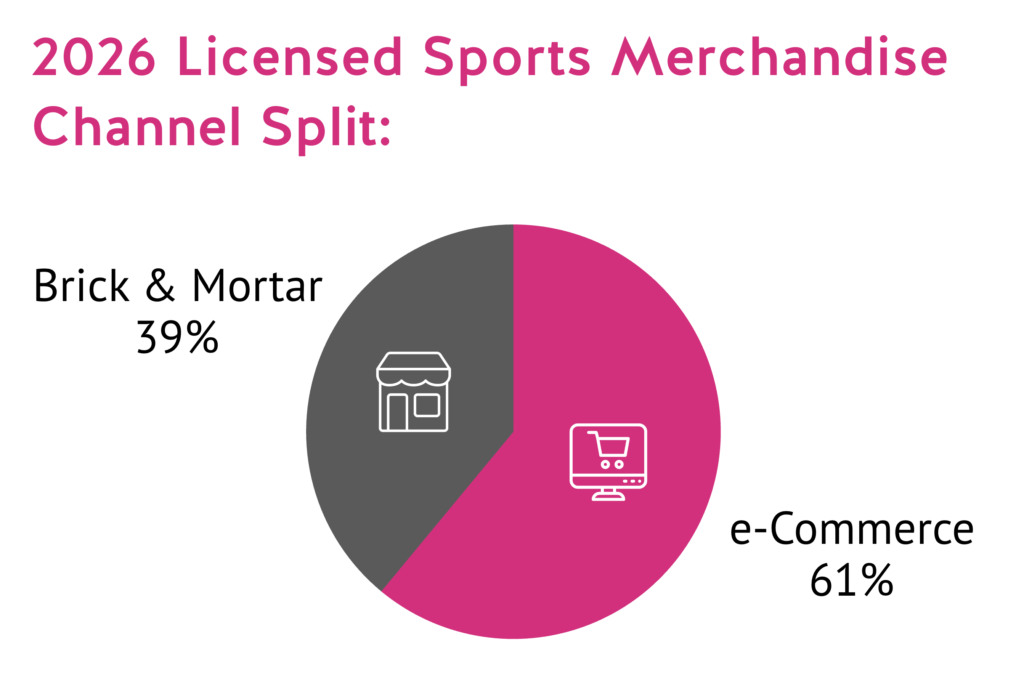
The E-Commerce Dominance: A massive 61% of all tournament distribution is moving through online channels. E-commerce distribution centers are working at peak capacity to fulfill online jersey orders before matches begin.
-
Stadium Retail: In an unprecedented move, retail giant Fanatics took over on-site retail operations for all 104 matches across the 16 host cities. This requires real-time demand forecasting and flexible cross-border logistics to ensure that when a specific country advances to the next round, their jerseys are instantly stocked at the stadium the next morning.
Keeping the Flow: How Ryson Spirals Support the Supply Chain
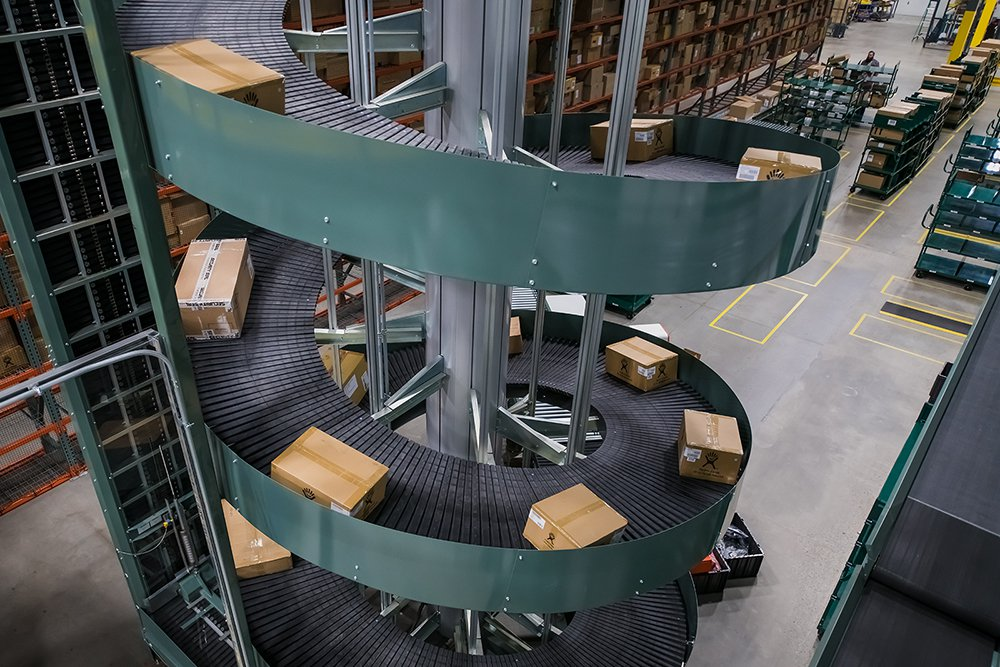
To handle record tournament volumes without grinding to a halt, manufacturing plants and fulfillment centers rely on high-capacity automation. This is where Ryson spiral conveyors serve as the ultimate defensive play for facility layouts.
Whether moving heavy beer cans, secondary packaging boxes, or polybags filled with jerseys, floor space is at a premium. Ryson’s continuous-flow vertical solutions take product lines straight up—reclaiming up to 75% of the floor footprint wasted by sprawling, traditional incline conveyors.
Unlike systems prone to product slippage or bunching, spirals maintain a smooth, uniform tempo at speeds up to 200 feet per minute. This rolling friction design ensures thousands of products ascend or descend without interruption—much like a world-class midfield keeping the ball in continuous motion. By eliminating bottlenecks, maximizing overhead space, and minimizing downtime, Ryson spirals ensure the global supply chain never misses a play.