



How to Navigate Supply Chain Disruption in times of crises?
A delayed container ship, a sudden labor shortage, or an unexpected geopolitical conflict can halt global supply chains overnight. We’ve seen this countless times in the past years. The pandemic, wars, natural disasters, the Suez Canal block, etc. These events continue to happen.

Decision-makers cannot control those events. However, they can control how resilient their operations become when disruption arrives.
One thing is for certain: Resilient facilities rely on efficient, automated systems that keep material moving even when the external supply chain becomes unpredictable.
Recent years proved how fragile global logistics can be. Many operations struggled because they depended on fragile systems or manual processes that failed under pressure.
The facilities that maintained throughput shared a common trait. They built systems capable of absorbing disruption without shutting down.
Why Is Operational Resilience So Important?
Supply chain disruptions rarely affect only inbound logistics. They cascade into production schedules, warehouse throughput, and order fulfillment. A single interruption often forces facilities to adapt quickly to new volumes, temporary shortages, or sudden demand spikes.
Operations designed for flexibility respond faster. Systems that maintain steady throughput allow companies to stabilize production while competitors scramble to react.
Automation and efficient intralogistics play a critical role here. Automated conveying reduces reliance on manual labor and minimizes operational bottlenecks. Facilities can continue running even when staffing levels fluctuate or conditions change.
 The Role of Vertical Conveying in Resilient Facilities
Material handling efficiency becomes even more important during supply chain instability. Facilities often need to move product faster, store temporary buffers, or reconfigure workflows quickly.
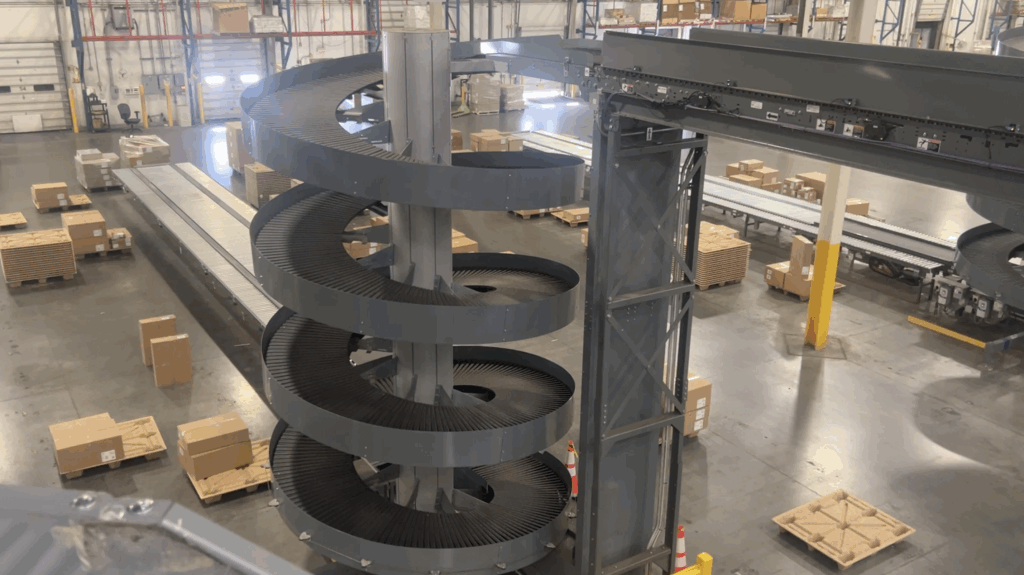
Ryson Spiral Conveyors support these needs by moving products vertically in a continuous and space-efficient flow. Instead of relying on forklifts or complex lift systems, facilities can maintain automated throughput between floors, mezzanines, and process lines.
Automated vertical conveying also reduces exposure to operational bottlenecks. Systems that depend heavily on manual handling introduce additional risk during disruptions. Automated Spirals maintain consistent product flow regardless of shift coverage or workforce availability.
Designing Facilities That Absorb Disruption
Organizations that navigated recent supply chain crises successfully invested in resilient facility design. Several operational strategies consistently proved effective:
-
Automate material movement wherever possible to reduce labor dependency.
-
Separate storage from production throughput so inbound delays do not immediately halt operations.
Facilities that follow these principles create valuable operational buffers. Even a few hours of additional throughput stability can dramatically improve response during supply interruptions.
A Strategic Advantage During Uncertainty
Supply chain disruptions will continue. Political instability, climate events, and economic shifts guarantee it.
The difference between operational disruption and operational resilience often lies inside the facility itself. Companies that invest in efficient intralogistics infrastructure gain the ability to adapt when conditions change.
Ryson Spiral Conveyors provide a proven way to strengthen that resilience. By maintaining reliable vertical throughput in demanding environments, they help facilities stay productive even when global supply chains face turbulence.
Global Flexibility
When disruption hits, the ability to source equipment and parts without being tied to a single geography can be the difference between a project that moves forward and one that stalls.
As Ryson’s parent company and European manufacturing and distribution partner, Royal Apollo adds exactly that layer of flexibility. If US supply is constrained (whether due to shipping bottlenecks, capacity pressures, or shifting trade conditions) European sourcing is available without compromising on product quality or engineering standards.