




In high-volume manufacturing, packaging, and fulfillment centers, throughput is the ultimate metric. Production goals are set by it, and plant performance is judged by it.
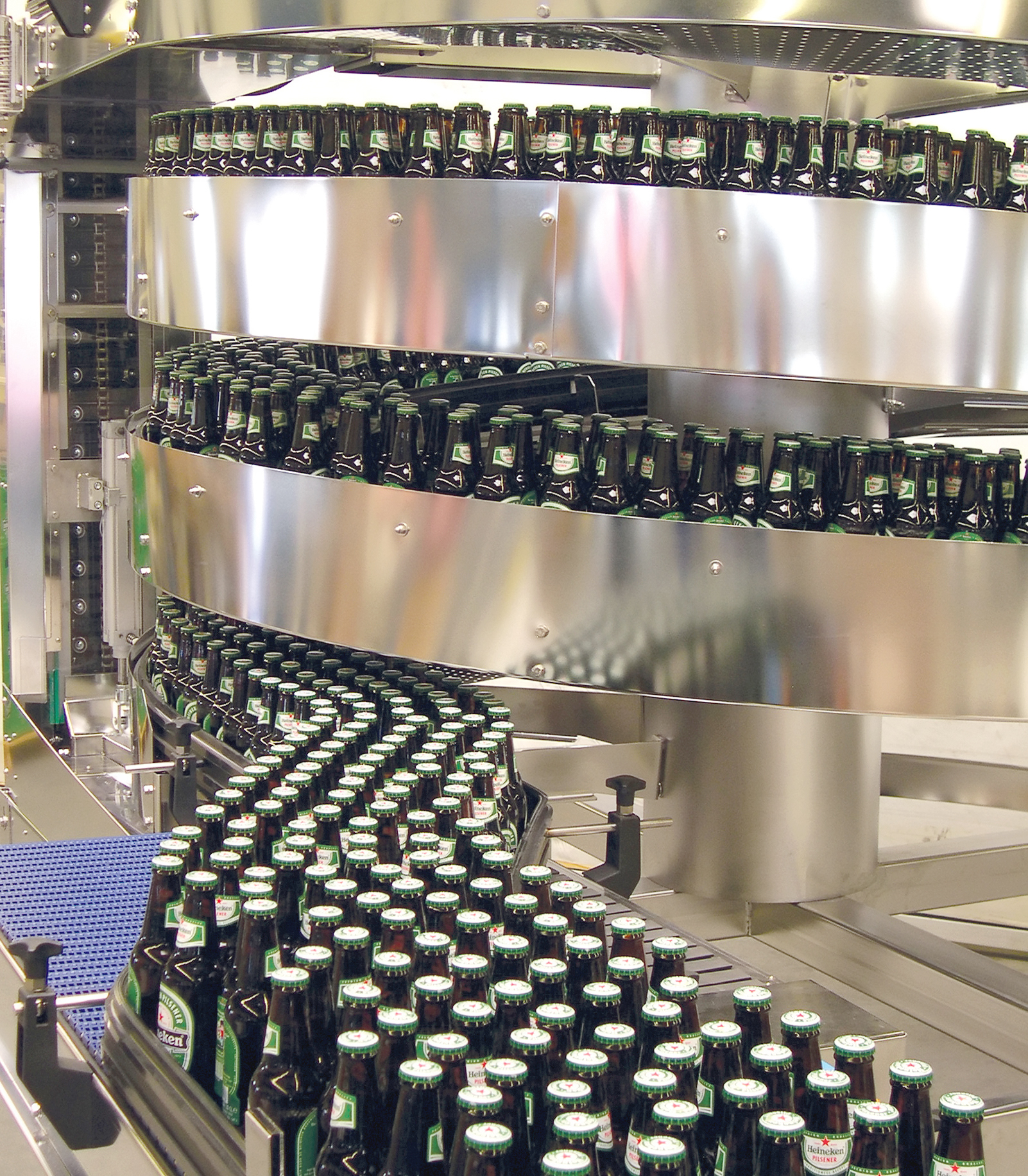
However, a critical nuance is often missed: speed is meaningless without continuity.
A primary packaging line can run at peak speeds, but if the vertical transition points create a “stop-and-go” pattern downstream, the entire facility’s efficiency plummets. In material handling, the hidden cost of accumulation, indexing, and batching is one of the largest drains on operational profitability.
To achieve true efficiency, facilities must shift their focus from pure conveyor speed to continuous product flow.
The Flaw of Batch Vertical Conveying
Many plant layouts still rely on traditional methods to move product to mezzanines, overhead lines, or secondary tiers. Typically, this looks like reciprocating vertical lifts (freight elevators) or steep incline belts.
While these systems function, they introduce inherent disruptions:
-
Accumulation Bottlenecks: Reciprocating lifts move products in batches. This forces the upstream horizontal line to stop, index, or buffer product while waiting for the lift platform to return.
-
Footprint: Incline conveyors handle continuous flow but require a massive horizontal run to achieve the necessary height. This eats up valuable floor space that could otherwise be used for production or storage.
-
Downtime and Product Chaos: Frequent starting, stopping, and transferring across multiple conveyor sections increases the risk of product jams, orientation loss, and package damage.
Every time a product stops moving, operational risk increases and efficiency drops.
 How Spiral Conveyors Protect the Line
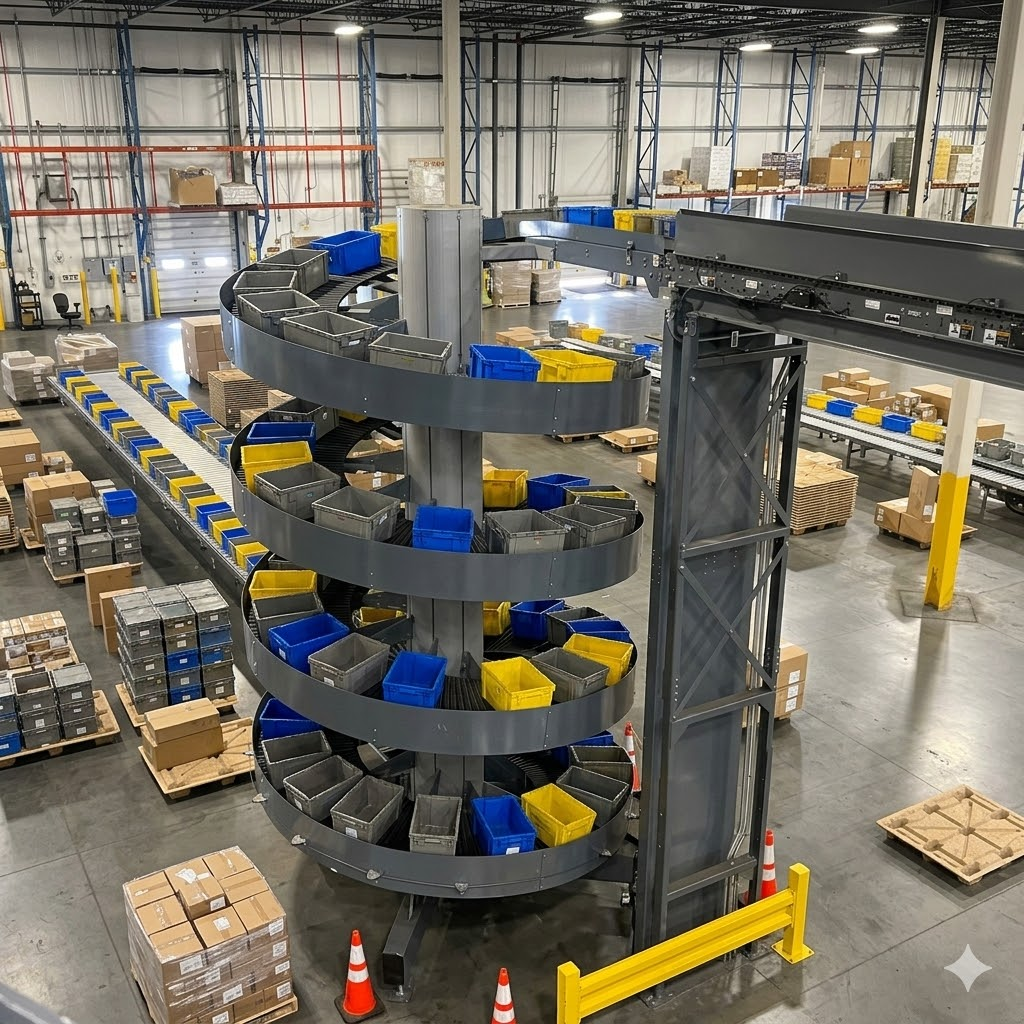
Vertical spiral conveyors solve this dilemma by transforming vertical travel into a seamless, uninterrupted extension of the horizontal line. By utilizing a continuous, uniform slat belt, spirals pull the stop-and-go dynamics out of the equation entirely.
There are three distinct mechanical reasons why a continuous loop stabilizes a plant’s overall efficiency:
1. Elimination of Transfer Points
Every transfer point between two distinct conveyor systems is a liability. It is a spot where a box can turn, a tote can catch, or a fragile product can be jarred. Because a spiral uses a single continuous chain mechanism to travel vertically, it eliminates the need for intermediate transitions. Fewer transfers mean fewer jams and less manual intervention from floor operators.
2. High-Capacity Dynamic Speed Matching
Modern packaging lines rarely run at a completely flat speed; they fluctuate based on upstream supply and downstream capacity. A high-quality spiral engineered with low-friction rolling design, can smoothly ramp up, slow down, or start and stop while fully loaded.
This allows the vertical section to dynamically match the pace of the rest of the facility without straining the motor or slipping under load.
3. Footprint Optimization
Maintaining a continuous line shouldn’t require sacrificing hundreds of square feet of floor space. Because spirals move product upward within a tight, cylindrical footprint (often less than 10 square feet), facilities can bridge the gap between floors or overhead lines without encroaching on primary work zones.
The True Measure of ROI: A vertical conveying system shouldn’t just be viewed as a piece of equipment that bridges point A and point B. It should be evaluated by how effectively it stabilizes the flow of the entire plant.
When you eliminate the micro-delays caused by batching and indexing, your upstream machinery runs smoother, your labor force spends less time clearing jams, and your total throughput numbers become entirely predictable.
Continuous Flow is a Financial Strategy
In today’s competitive landscape, capital expenditures must drive measurable operational results. Optimizing for continuous product flow has become a financial strategy that lowers total cost of ownership, cuts energy spikes from frequent motor restarts, and maximizes the capacity of your existing square footage.
If your facility is looking to scale production, eliminate vertical bottlenecks, or optimize a multi-tier mezzanine layout, focusing on line continuity is the fastest way to see a return.
How does your current vertical layout handle line surges? If you are planning a layout change or looking to optimize your product flow, connect with the Ryson team or explore our case studies to see these systems in action.