




Ryson’s Commitment to ESG Starts with Responsibility
Environmental, Social, and Governance, commonly known as ESG, has become a major focus across manufacturing and supply chain industries. ESG measures how companies manage environmental impact, support people and communities, and maintain responsible business practices. Customers, employees, and business partners increasingly expect manufacturers to operate sustainably while creating long-term value.
For companies in material handling and automation, ESG is no longer optional. Energy efficiency, operational sustainability, employee engagement, and community involvement now influence purchasing decisions and business relationships. Companies want partners who can help lower environmental impact while supporting responsible growth.
 At Ryson, ESG is not limited to a single initiative. It influences how we design our equipment, support our customers, and invest in our local communities.
From an environmental perspective, Ryson focuses on delivering efficient conveyor solutions with a low total cost of ownership. Ryson Spiral Conveyors already help facilities reduce building footprints by maximizing vertical space. Advanced motor technology now pushes that efficiency even further.
The result is a conveyor solution that helps customers reduce energy consumption, lower maintenance requirements, and improve operational efficiency. Businesses can move products more sustainably without sacrificing throughput or reliability.
However, ESG extends beyond equipment performance. The social component of ESG focuses on people, community engagement, and positive local impact. Ryson believes strong businesses should actively support the communities where employees live and work.
That philosophy inspired the Ryson Sponsorship Program. The initiative supports local clubs and organizations where employees volunteer and participate. The program encourages employee engagement while strengthening community relationships and supporting meaningful local causes.
The first half of 2026 highlighted several impactful examples.
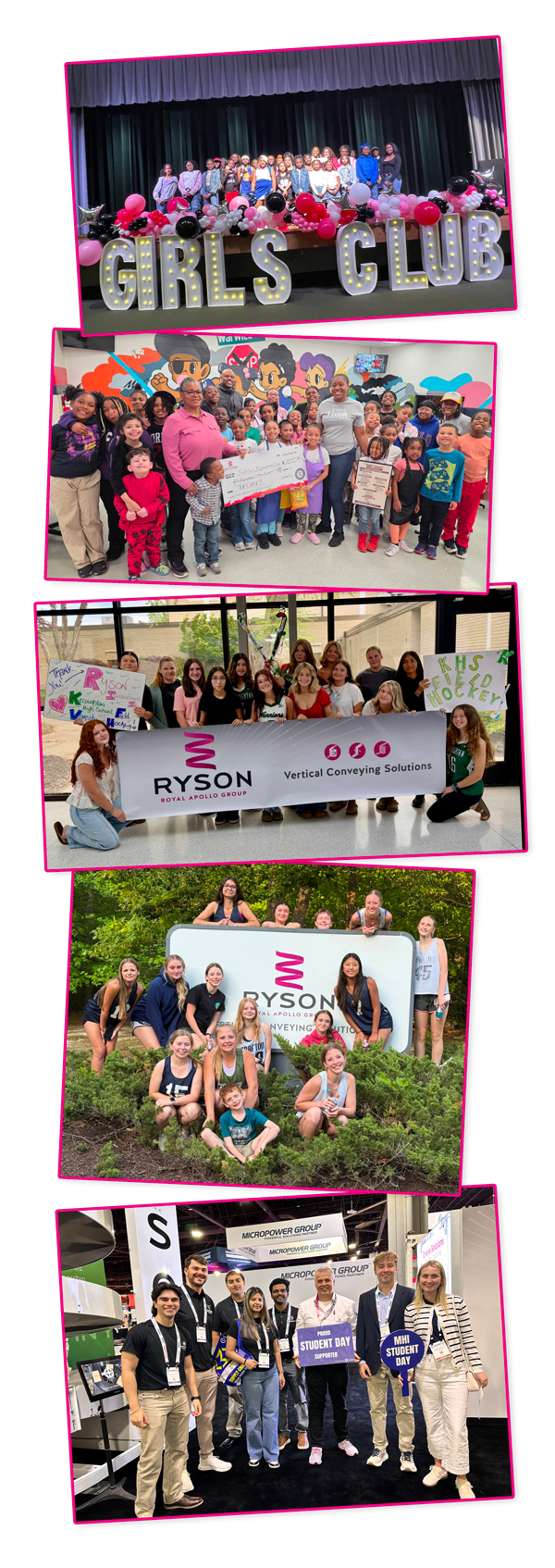
Lucy Johnson received sponsorship support for the Girls Mentor Group. The organization helps young girls build confidence, develop life skills, and access mentorship opportunities.
Ashley Simpson’s Youth Spring Break Program provided meals, activities, and supplies for children in Newport News. The program created a safe and engaging environment for local youth during school break.
Ryson also supported the Kecoughtan High School Girls Field Hockey team through funding for uniforms, transportation, and equipment.
In addition, Bill Keane volunteered with students attending Modex in Atlanta through an MHI-organized learning initiative. The experience introduced students to modern material handling technologies while encouraging future industry involvement.
These efforts reflect Ryson’s broader commitment to ESG. Sustainable business practices involve more than reducing energy use. They also require investment in communities, employee engagement, and responsible long-term partnerships.
At Ryson, commitment to ESG remains central to delivering value for customers, employees, and communities alike.